Last June, part of the Mr.Goodfish team flew to Ecuador for a few days.
The goal? To learn about Penaeus vannamei shrimp farming practices at various types of farms in Ecuador. Working alongside the Earthworm Foundation, the objective was to identify the various drivers and barriers to making this industry more sustainable—both in terms of farming practices and environmental impact, as well as social conditions for employees. We visited various farms: from the south in Guayaquil to the north of the country in Quito.
In the previous newsletter, we explained shrimp farming. Read that article here.
 In this one, we’ll be talking about what shrimp eat! Shrimp are said to be omnivorous; they eat everything (small crustaceans, algae, dead fish, etc.). Their diet changes throughout the different stages of their life.
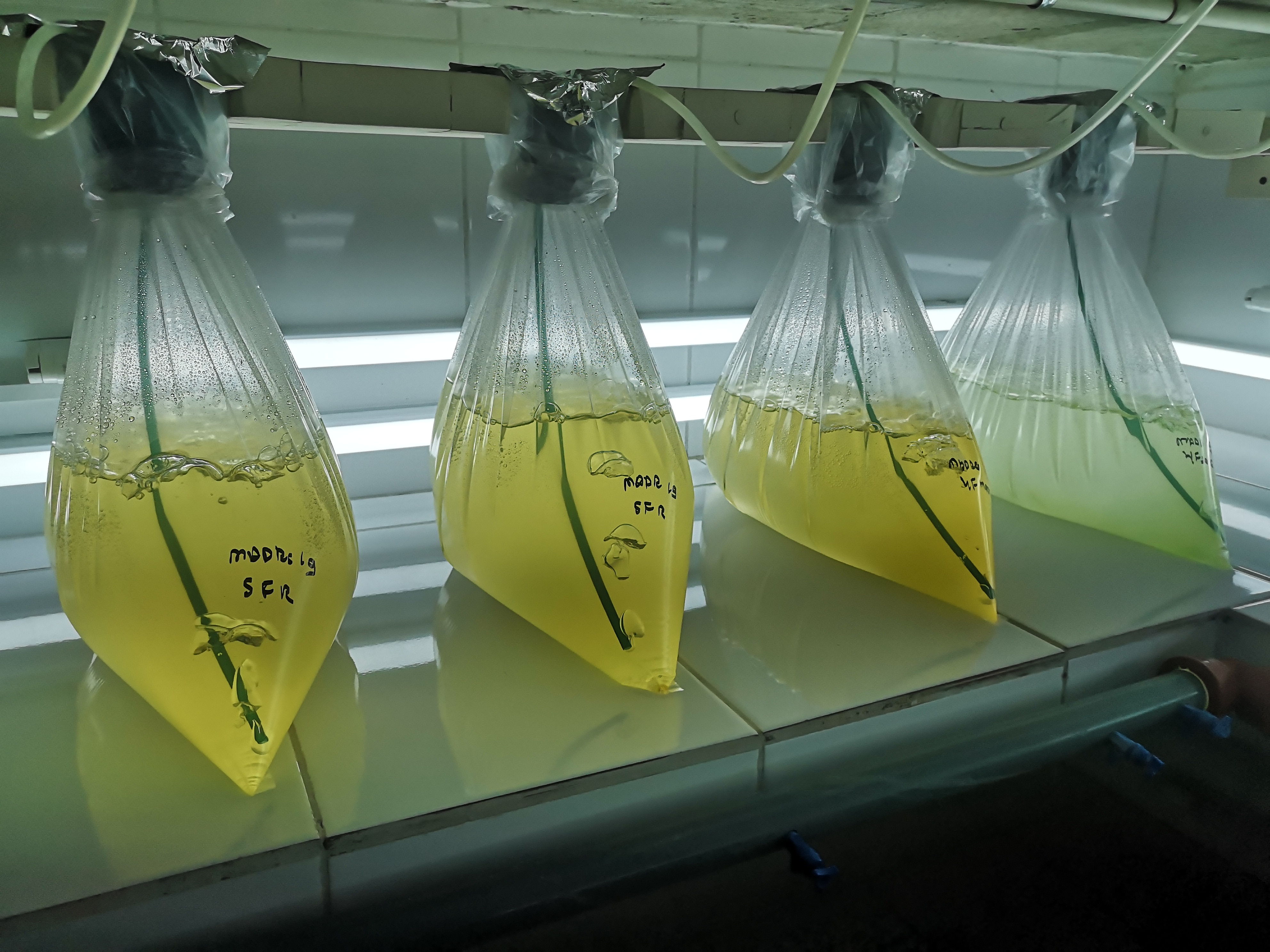
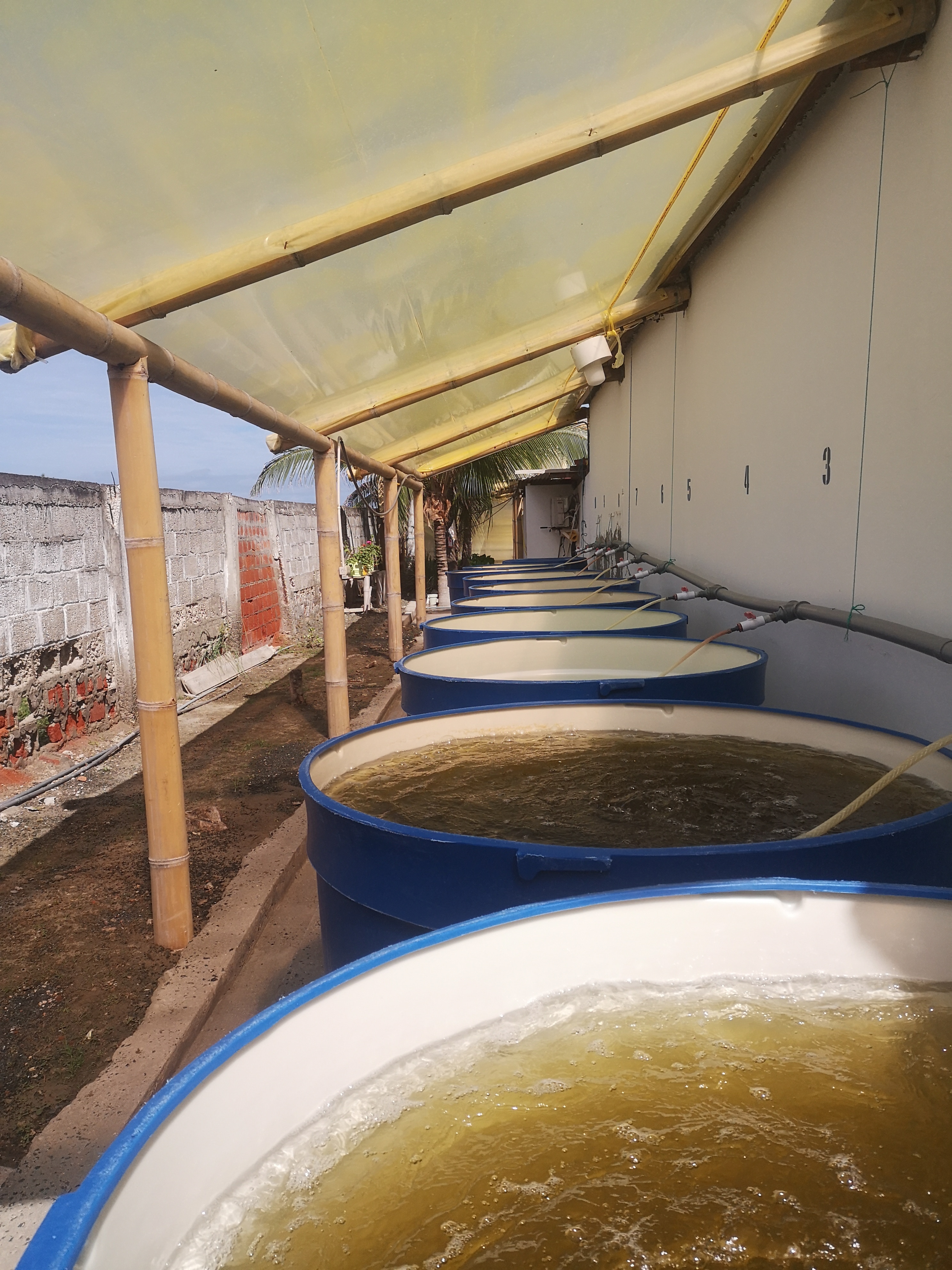
In the larval stage, shrimp are fed algae, which is sometimes grown directly by Ecuadorian farms. First cultivated in a laboratory, the algae are transferred to outdoor tanks once their density is sufficient.
Once they reach the grow-out tanks, the shrimp are fed a diet composed of raw materials such as fish meal and fish oil, plant proteins, minerals, and vitamins.
Some farms feed the shrimp several times (8 to 10 times) a day, while others naturally benefit from water rich in organisms naturally present in the environment (phytoplankton and zooplankton), which meet the shrimp’s nutritional needs.
As part of its Aquaculture initiative, the Mr.Goodfish program advocates for a diet based on proteins from sustainable sources, meaning proteins produced, if necessary, from wild species whose fisheries are sustainably managed or certified as sustainable (an increasing proportion as practices improve), and, as much as possible, prioritizing other protein sources (such as algae, flax, insects, or by-products, for example).