Why is insect meal used in aquaculture sustainable?
 The pellets used in aquaculture contain all the protein, lipids, and other essential nutrients required by farmed species. They are, in part, made from fish meal and fish oil. Fish meal is derived from wild fish managed under quotas and from fish byproducts. Twenty percent of wild fish caught in Europe comes from the fishmeal industry (EUMOFA, 2017): an industrial and intensive fishery whose catch is used exclusively for the production of aquaculture feed.
With the growth of aquaculture, stagnating catches in the fishmeal industry, and a growing commitment to ensuring the ecological sustainability of this sector, it became necessary to find alternative feed sources to meet the needs of aquaculture farms.
The use of plant-based proteins (soy, flax, etc.), algae, and byproducts (also known as co-products, referring to bycatch, discards, or unsold fish. These are generally fish or parts of fish not typically consumed. They come from traditional seafood processing methods such as filleting, gutting, and skinning…) and, more recently, insect meal are alternatives to the use of these marine resources. As a result, fishing pressure on wild fish is reduced, making it possible to pursue a sustainable diet.
In addition to being natural food for fish, insects are rich in protein (45–75% of dry weight, depending on the species) while having a very low environmental and water footprint (based on the environmental impact and water use required to produce a food item). Furthermore, insects have very good feed conversion ratios, meaning the efficiency of a feed in producing 1 kg of insects.
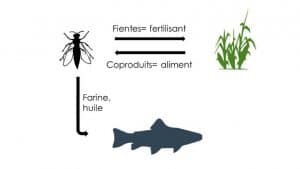
The insect farming cycle is itself sustainable and complementary to agriculture: insects are fed with agricultural byproducts such as oilseed meal and cereal straw, while insect droppings are reused to fertilize those same fields.
Since 2017, the Mr.Goodfish program has partnered with Innovafeed, an innovator in the breeding and processing of insects for aquaculture fish. Together, we promote responsible and sustainable aquaculture.