Depending on the time of year, when strolling along the beaches of our various coastlines, you may spot clusters perched on the rocks. These dark clusters are nothing other than living organisms: mussels.
In France, these bivalve mollusks can be sold either as wild-caught specimens or as farmed ones.
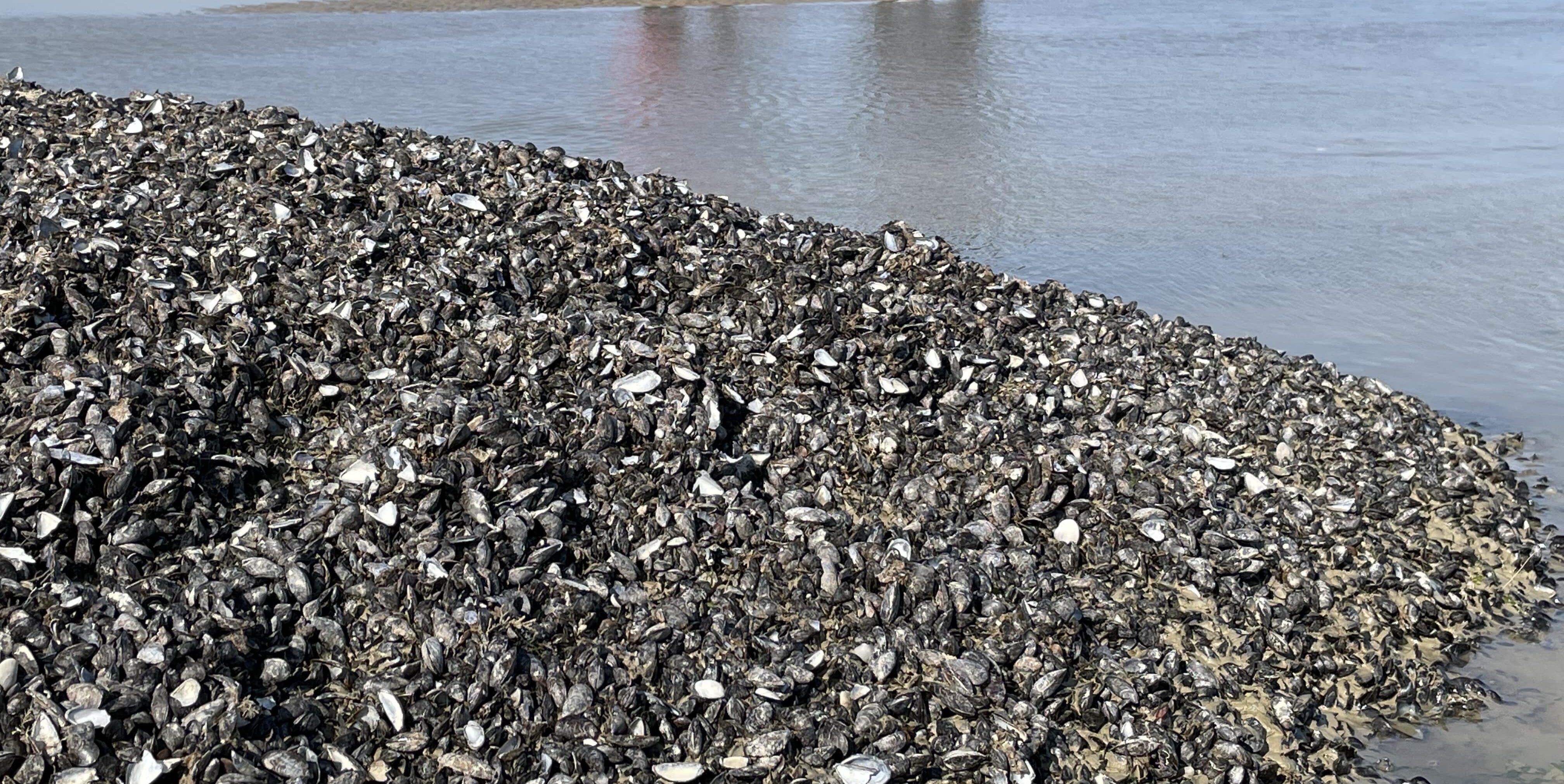
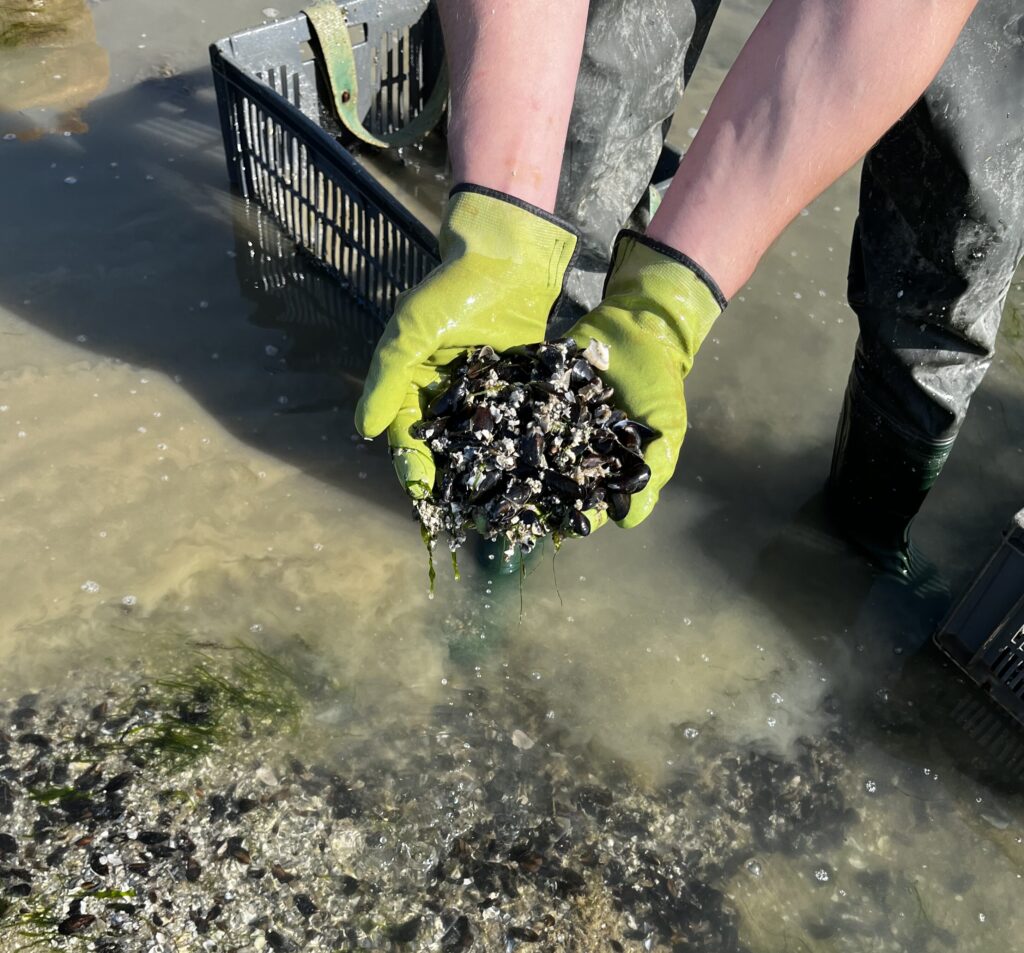
Wild, common, and Mediterranean mussels (Mytilus edulis and Mytilus galloprovincialis), also known as “local mussels,” are bivalve mollusks that grow naturally along the French coast. They thrive in nutrient-rich marine environments, attached to rocks and other marine substrates. They are harvested at low tide by fishermen (both professional and recreational), who know the production areas and the best seasons for gathering.
The quality of wild mussels is often attributed to their natural environment, which contributes to their distinct flavor and their somewhat firm texture. They come in a wide variety of sizes and shapes, reflecting the diversity of the marine habitats where they are harvested. However, the harvesting of wild mussels is subject to strict regulations to preserve natural populations and maintain the ecological balance of coastal ecosystems.
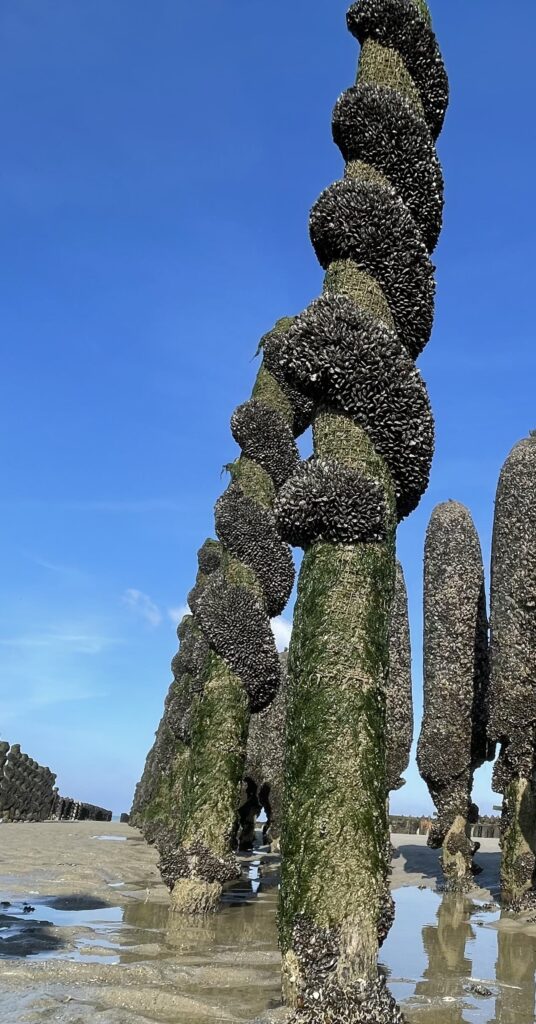
In stores, farmed mussels are more commonly available, which helps meet growing market demand while ensuring a steady supply. Mussel farming is known as mytiliculture.
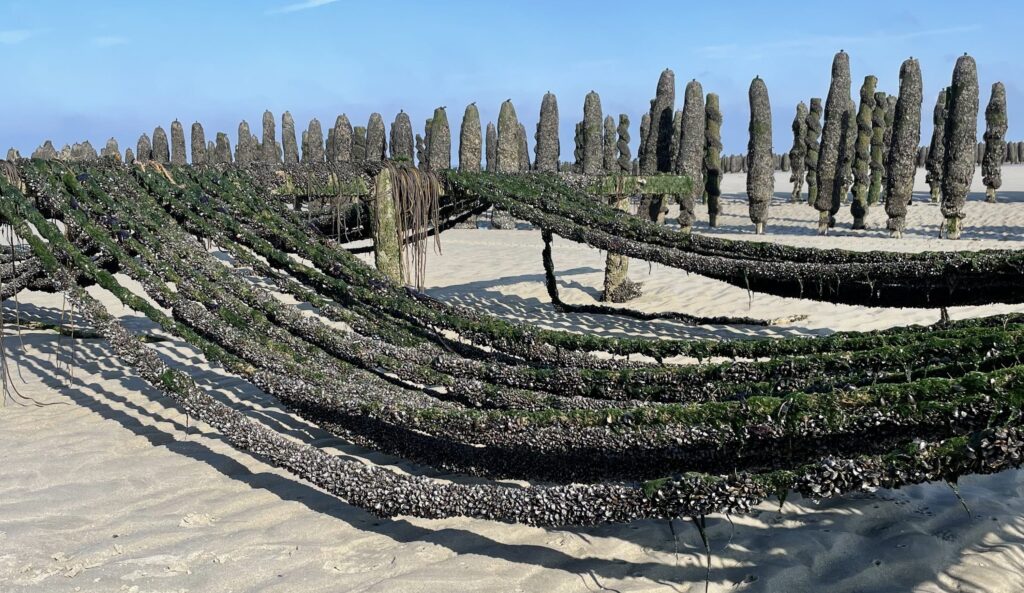
Various farming methods are used, some of which involve pens and others that do not. One of the most traditional methods is farming on wooden stakes. This technique involves installing wooden stakes (bouchots) in suitable marine areas, where the mussels are then seeded. The mussels naturally attach themselves to the bouchots and grow slowly, following the rhythm of the tides. To be classified as "bouchot mussels," the mussels must spend at least 6 months on the stakes.
 Another method, rope-line cultivation, involves raising mussels on suspended ropes. The mussels are constantly submerged, promoting faster growth and meatier flesh.
Mussels, and all other bivalves, play a crucial role in the balance of marine ecosystems. Their ability to filter water is essential for maintaining the quality of aquatic habitats. In fact, these mollusks filter large quantities of water in search of food, thereby trapping suspended particles, which…
…
This filtration helps improve water clarity, thereby promoting photosynthesis in marine plants and the proliferation of phytoplankton, the foundation of the aquatic food chain. Furthermore, by removing excess nutrients, bivalves help reduce the risk of eutrophication, a phenomenon that is harmful to aquatic ecosystems.
They thus contribute to water purification, the regulation of the nutrient cycle, and the fight against climate change.