Game rules
For millennia, the oceans have been a source of life, mystery, and endless possibilities. They connect cultures, sustain economies, and support an extraordinary web of marine creatures.
But today, the balance of the seas is at risk. Climate change, pollution, overfishing, and habitat destruction continue to threaten their fragile ecosystems.
In Pillars of the Sea, players step into the shoes of a character who relies on and protects the ocean-scientists, fishers, policymakers, activists, and coastal communities. Each character faces their own challenges, but all share a common goal: finding solutions with the ultimate goal of protecting marine biodiversity.
Every decision can tip the scales – will your team rise to the challenge and keep the balance of the sea? Remember: every choice has consequences and players must work together to create a sustainable future.

Who can play?
Number of players: 3 to 6
Age: 12+
No knowledge of marine & maritime science
is required. Learn as you play!
Game components
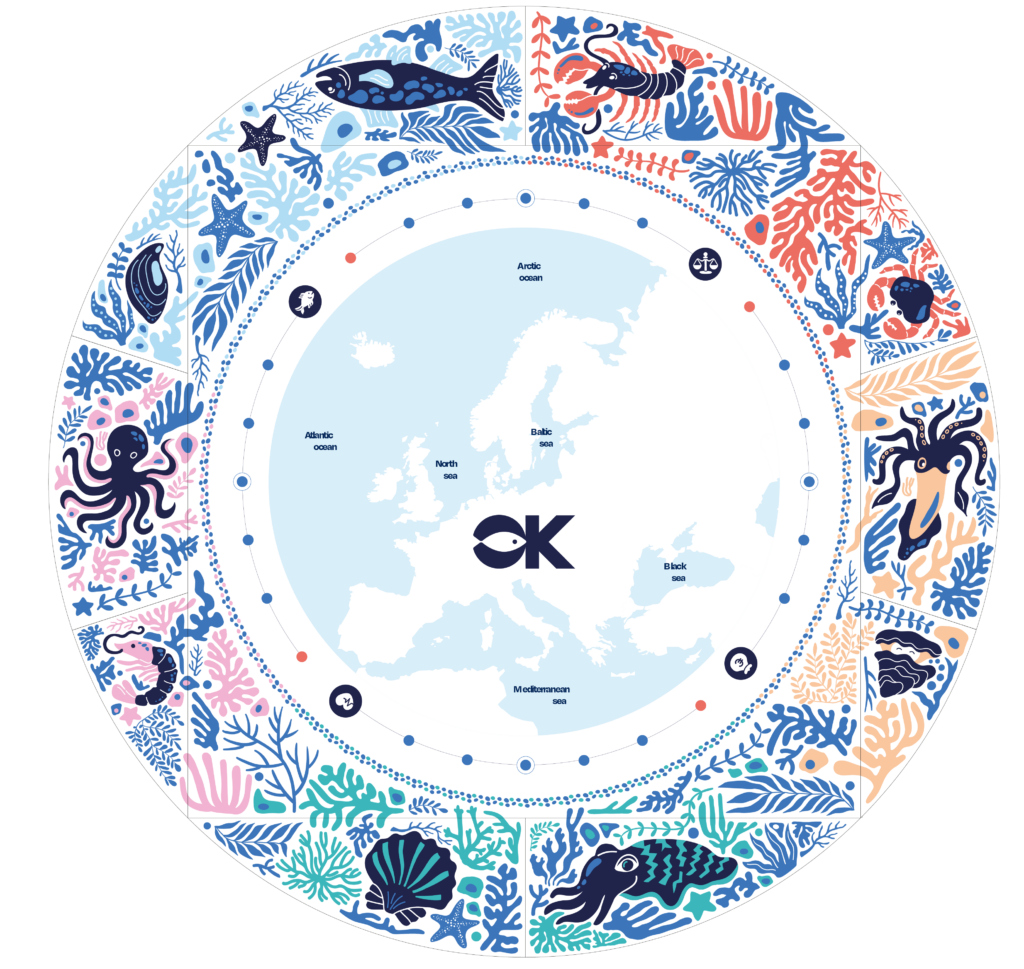
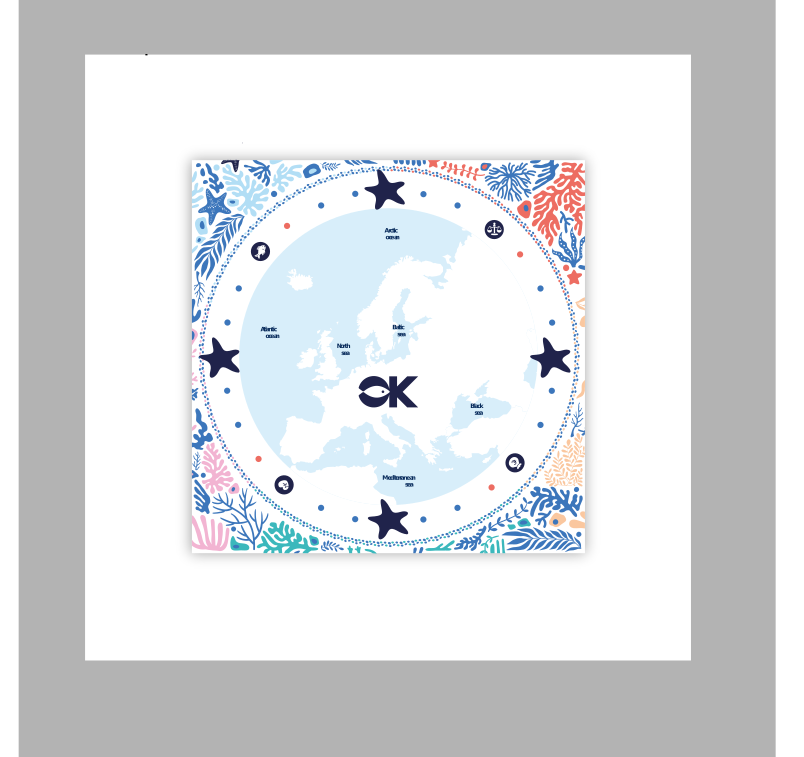
1 board
Track the state of the
four pillars throughout the game,
and complete it using puzzle pieces.
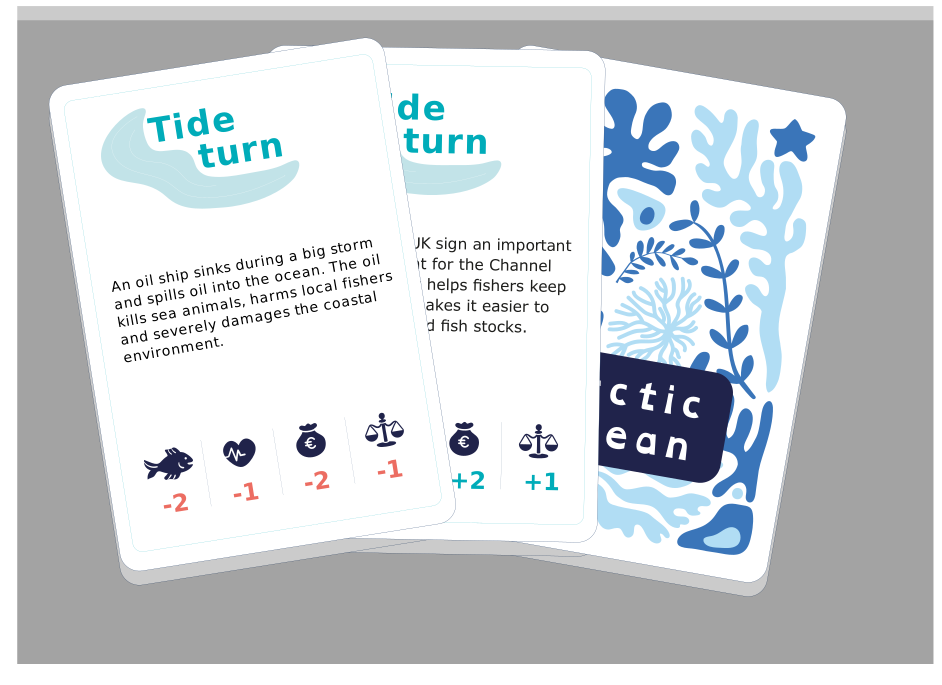
5 decks of 3 Tide
Turn Cards
Hidden in the Quest Card decks, they add an element of surprise!
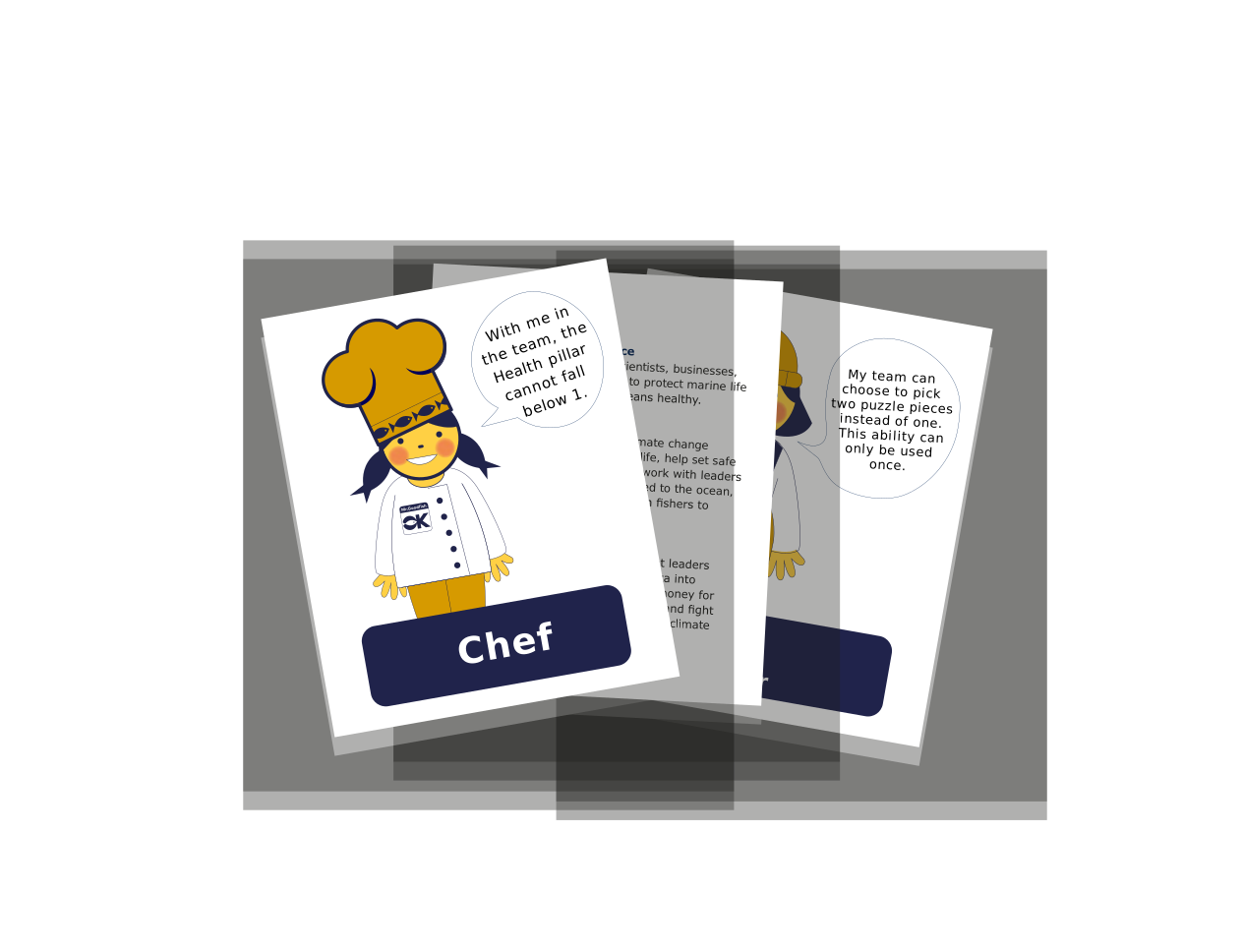
13 character cards
Each card describes a
character with a special game ability,
their occupation, what’s important to them, and the challenges they are facing in their work.
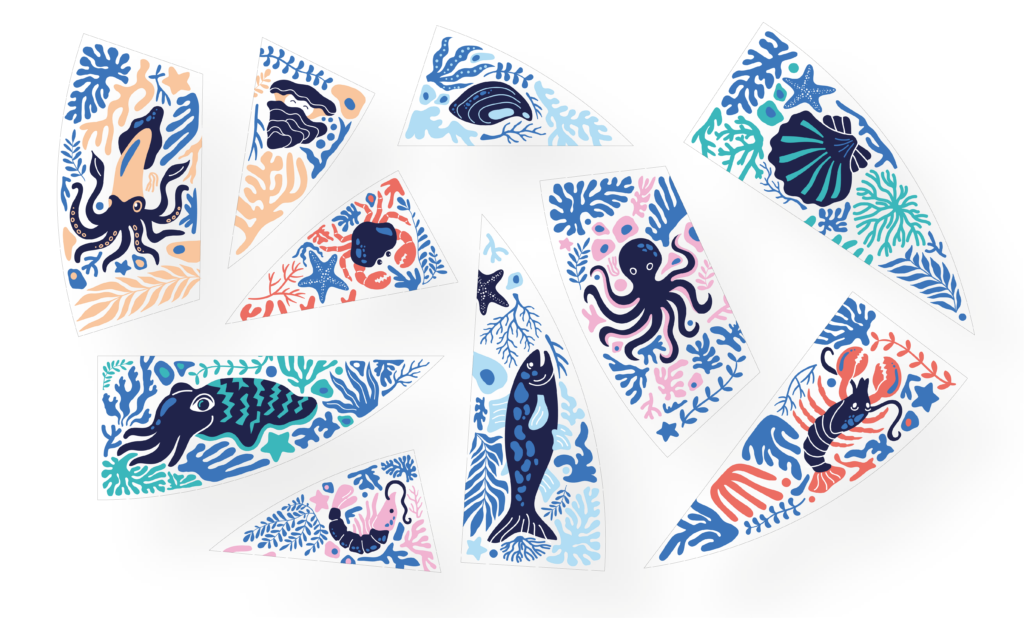
10 Puzzle pieces
Collected after making decisions from Quest Cards. There are two
available per sea, matching the colours on the back of the
Quest cards and on the board.
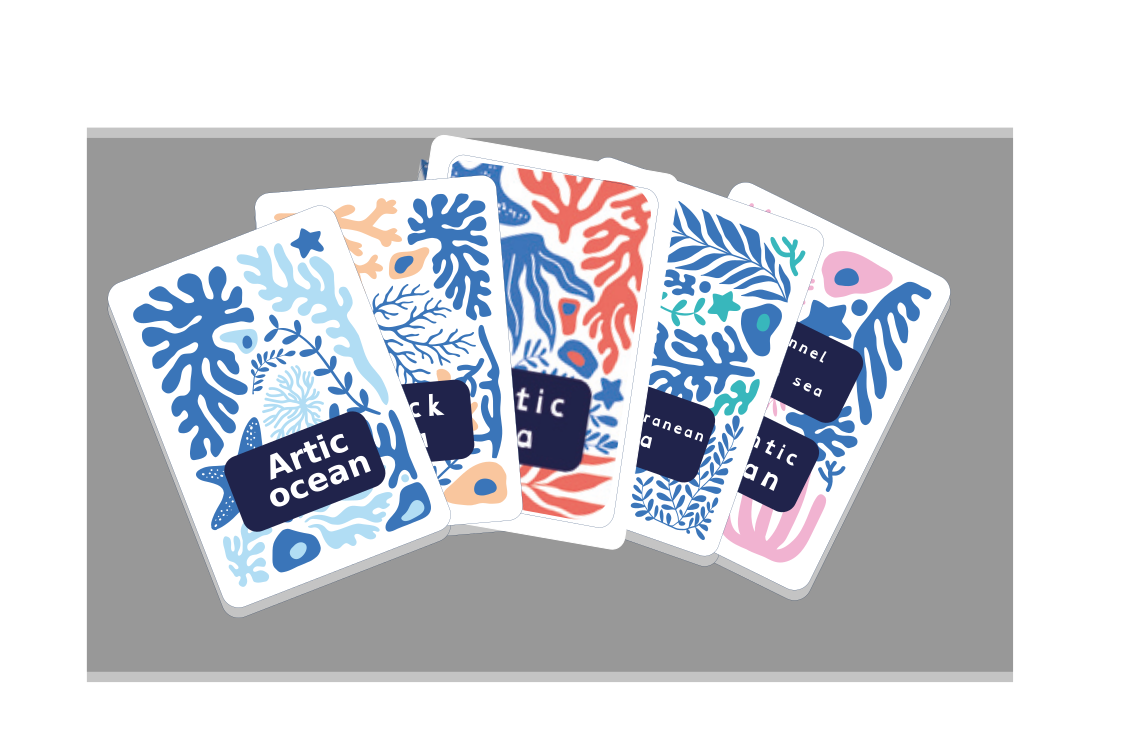
5 decks of 5 Quest Cards
One deck per sea basin, matching the colours of the puzzle pieces and the board.
Each card presents a scenario with three possible decisions.
1 handbook
Refer to this handbook to discover the outcomes of the decisions made from the Quest Cards. It also contains a glossary.
Pawns
No pawn is furnished. Use what you have available, like flat marbles, pebbles, shells or make origami paper stars.
Your goal
Pillars of the Sea is a game where players work as a team, resulting in winning or losing all together. You need three to six players to play the game.
There are four pillars critical to recovering the balance in the oceans:
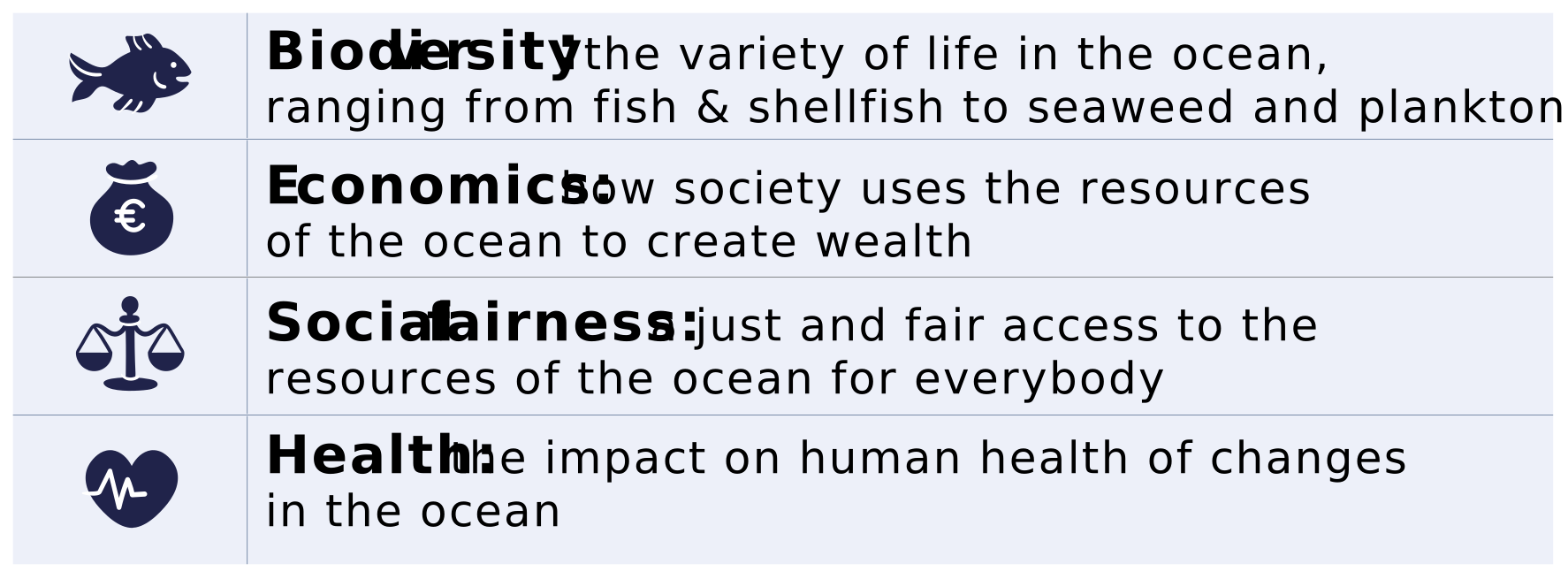
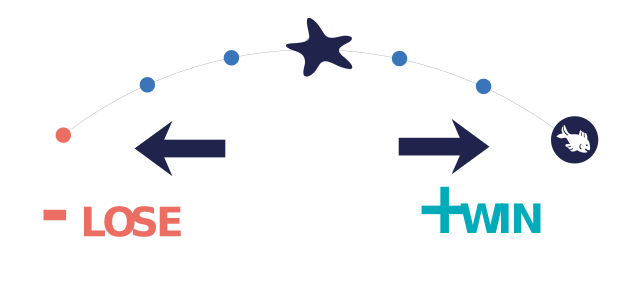
The team faces different scenarios covering all European seas, and players will have to decide together how they want to address these challenges. Each decision will make the team earn or lose points on the four pillars displayed on the board.
Be careful: if a pillar falls by reaching zero, the team loses.
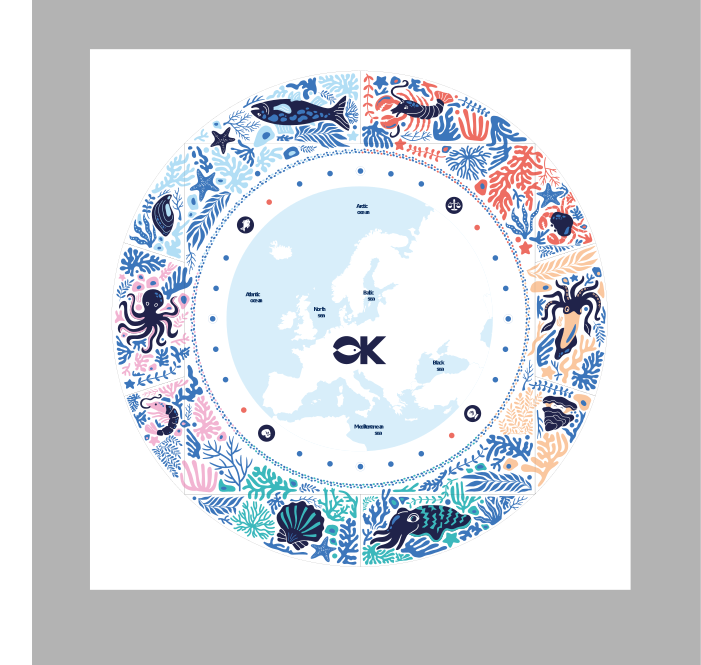
Every time the team makes a decision, a puzzle piece is earned and placed on the edge of the board to form a circle. There are ten puzzle pieces to collect, two per sea. Complete the puzzle while maintaining all the pillars above zero to win the game and save our oceans.
Beware of surprises! In each Quest card deck, there are some hidden Tide Turn Cards with an event beyond the control of the team. When a player picks a Tide Turn Card, no decision is taken: the team moves the points up or down the pillars and moves to the next turn.
How to play?
1 – The team positions
four pawns on the board, one in the middle of each pillar.
2 – Shuffle each Quest Card deck, making sure the Tide Turn cards are mixed in. Place each deck on the table away from the board. Make sure to place them backside facing up.
3 – Make sure the puzzle pieces are within reach.
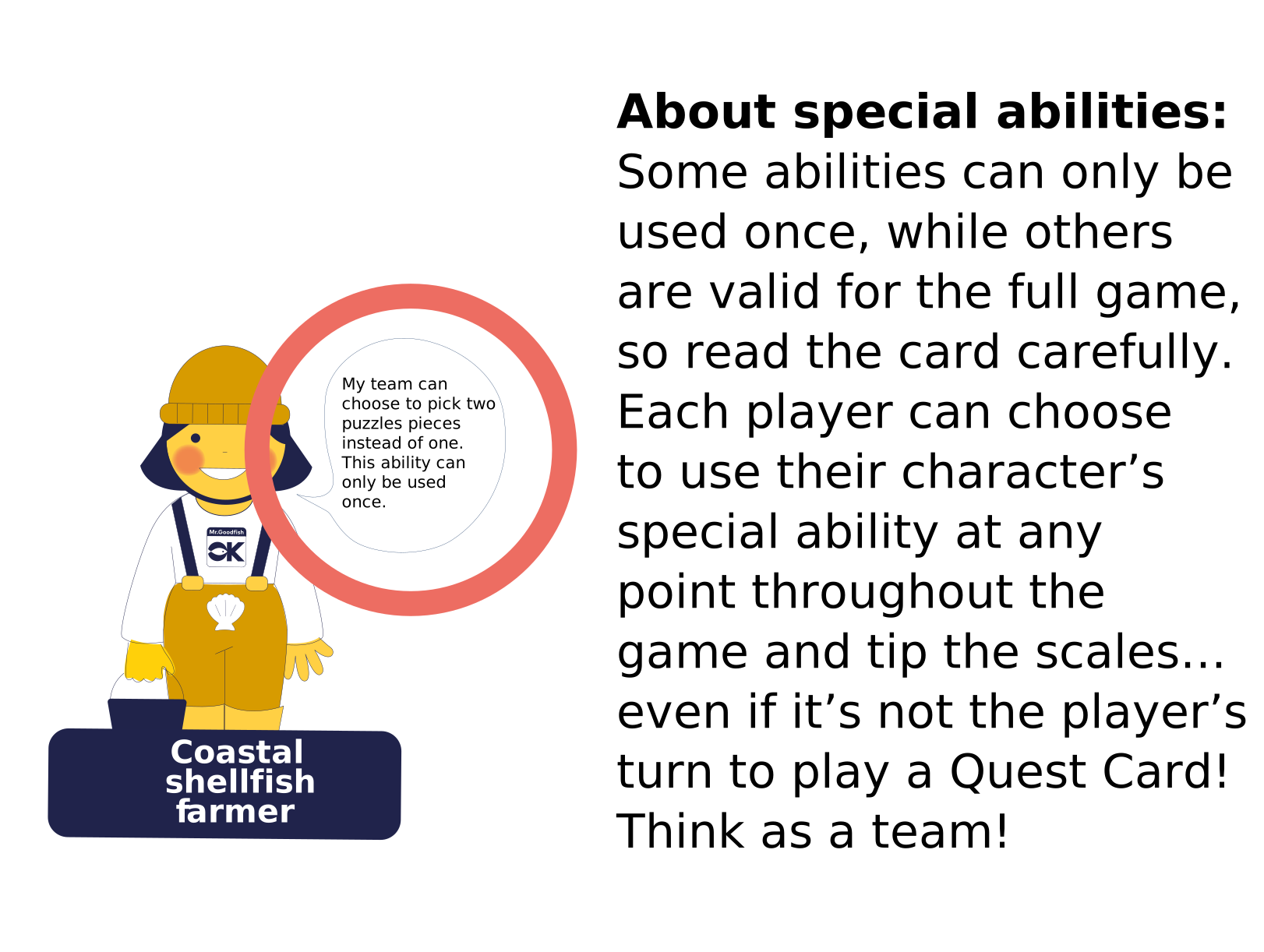
4 – Each player chooses a character Card. Each character has a special ability which can change the course of the game, so choose wisely! Players read their card out
loud to the rest of the team, and place their card standing in front
of them.
5- If the special power of one of the characters must be used before
the game starts, use it at this stage.
6 – The youngest player starts by drawing a Quest Card from the deck of their choice. The Quest Card introduces a scenario with three possible decisions. The team discusses the scenario, but the player taking the turn is the one making the decision. There is no right or wrong answer, but every choice the team makes will have an impact.
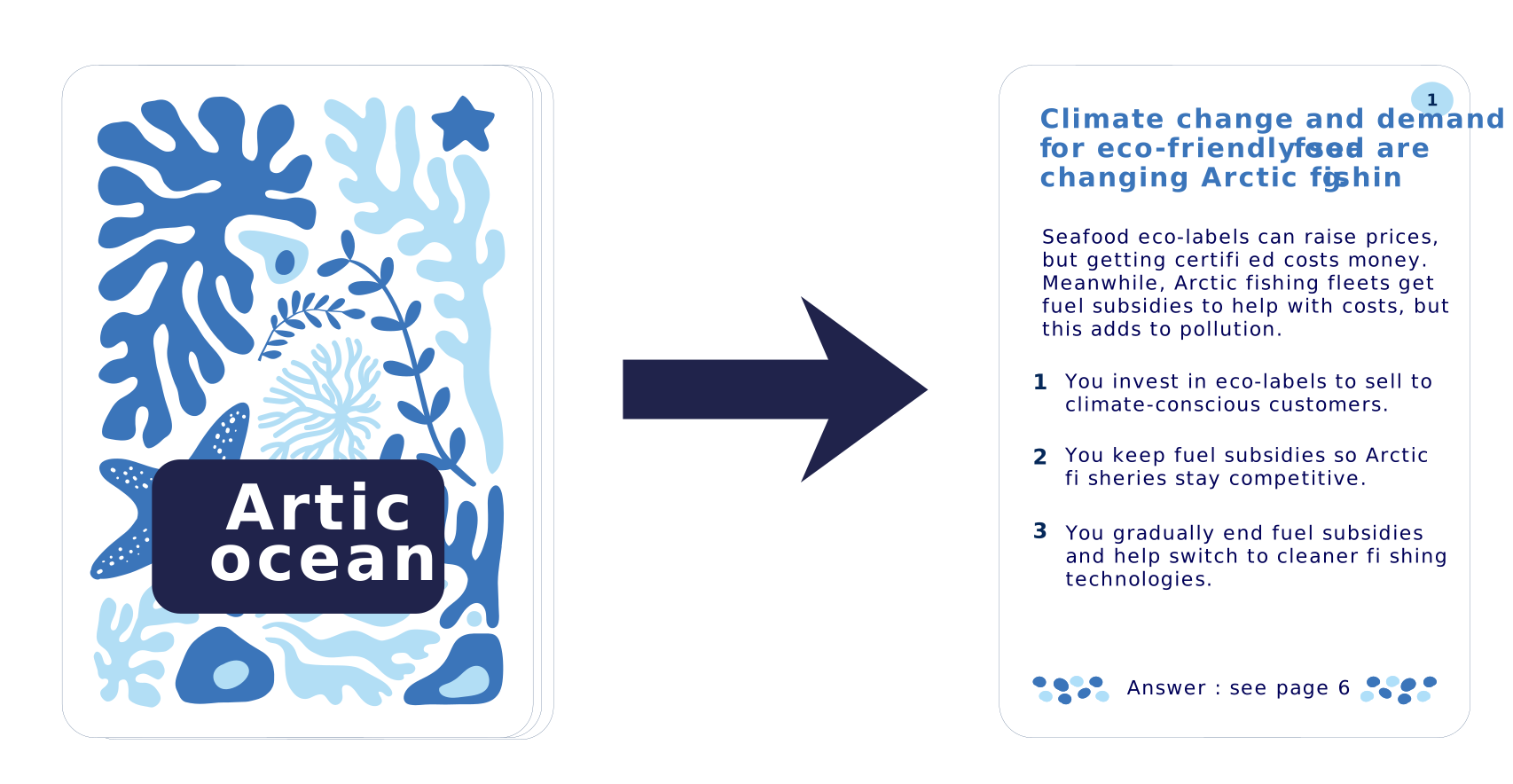
7 – When the decision is made, check the outcomes in the handbook (the corresponding page number is written in the Quest Card) and move the pawns up or down on the pillars following the instructions. Take time to read the
outcomes out loud to the team: this could help with the next rounds.
8 –The player takes a puzzle piece of the same colour as the Quest Card, and places it on the edge of the board where the colour matches.
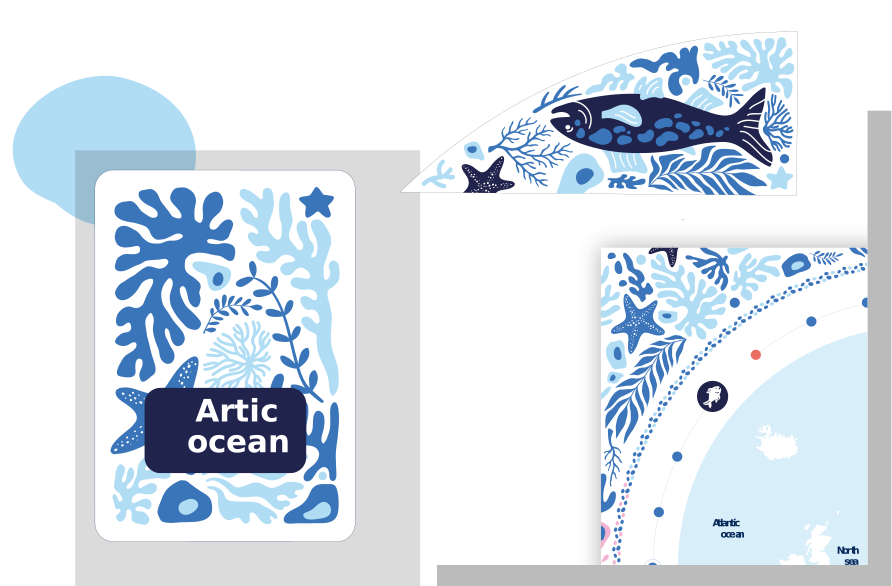
9 – The game continues in a clockwise direction, and the next player picks a Quest card from the deck of their choice and continues as point 6 above.
10 – If a player picks a Tide Turn Card, the team moves the pawns up or down the pillars following the instructions. The team does not earn a puzzle piece.
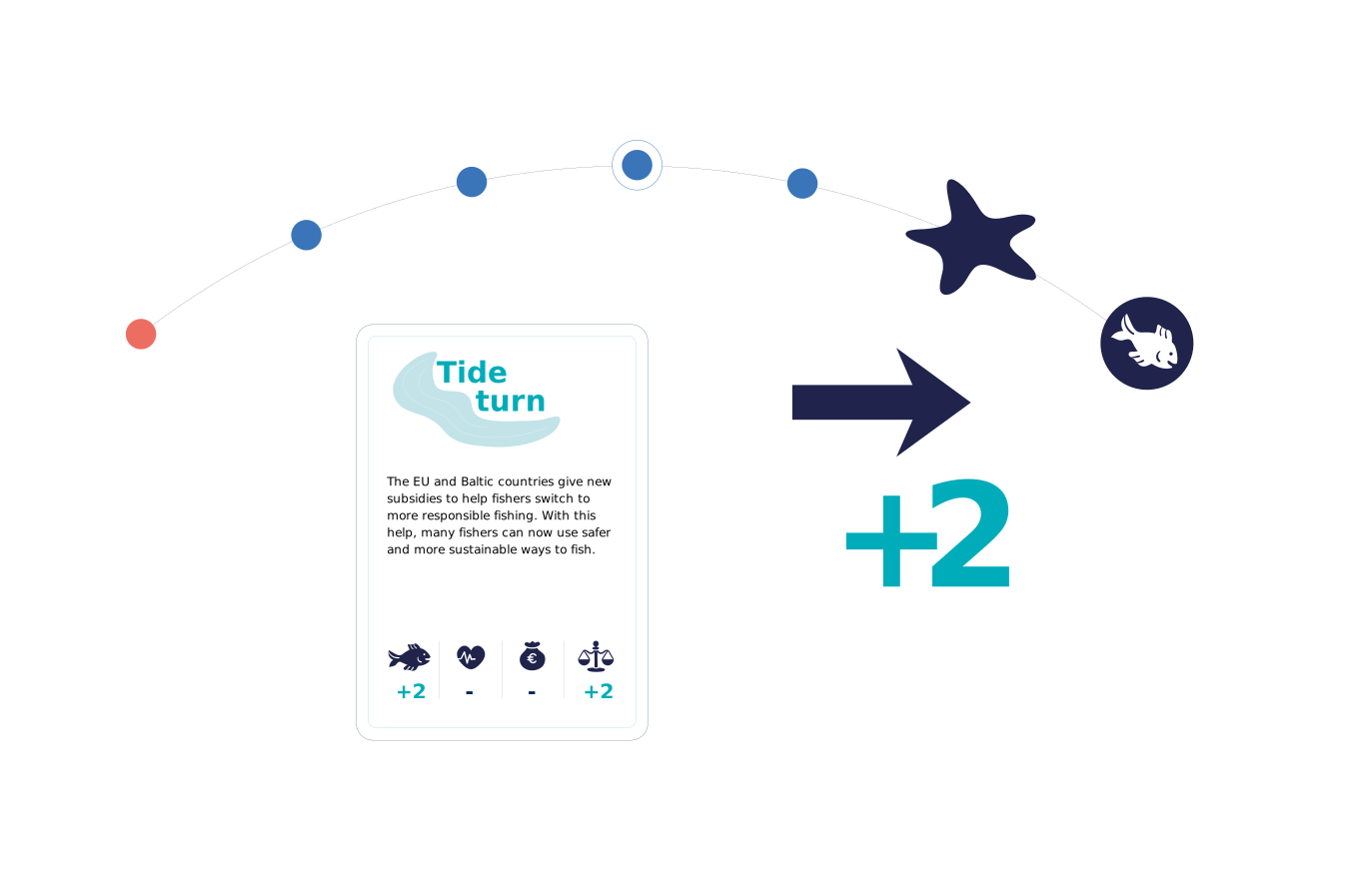
11 – Once the team has collected the two puzzle pieces from the same sea, players are still allowed to pick Quest Cards from the corresponding deck if they wish, but they will not earn other puzzle pieces.
The game ends either when the team wins by completing the puzzle, or loses by bringing a pillar to 0.
Difficulty level
Here are some alternatives to spice things up:
- At the start of the game, instead of placing the pawns in the middle of each pillar, place them 1 or 2 points closer to the bottom. Pillars face a higher risk of falling to 0.
- Instead of grouping the Quest Cards per sea, mix them all up. Players will have to pick the card at the top of the deck regardless of which sea it represents. This will make the game longer as the team will rely on luck to get a Quest Card corresponding to the sea from which they are missing a puzzle piece.
This game was developed as part of the Mr.Goodfish3.0 project funded under the European Union’s research & innovation programme Horizon Europe and the EU Mission “Restore our Oceans & Waters” which aspires to protect and restore the health of European oceans and freshwaters through research & innovation, citizen engagement and investments in the blue economy, with a 2030 target.
The game is part of the Mr.Goodfish3.0 awareness-raising campaign for responsible consumption of sea, freshwater and aquaculture products. Our campaign will propose other materials to raise awareness among citizens, youth, children and seafood professionals.
In particular, we will upgrade the existing Mr.Goodfish app with new recommendations of seafood species from all over Europe to encourage a more balanced & responsible consumption of products from the sea.
Do you want to be part of the campaign?
Contact our project’s communication manager, Clara Boissenin at cboissenin@ecsite.eu
Learn more at www.mrgoodfish.com
Licence: CC-BY-SA