Mussels, often viewed as mere bivalves, are proving to be true allies.
The research community has made them one of its best partners. In addition to their culinary value, they also serve as natural sentinels in monitoring the health of aquatic ecosystems. Thanks to their ability to filter water for food, mussels act as bioindicators, absorbing and accumulating various contaminants and substances present in their environment. This process, known as biomonitoring, provides scientists and resource managers with an effective and cost-efficient method for assessing the environmental health of coastal areas and estuaries. By monitoring levels of contaminants such as heavy metals, pesticides, and hydrocarbons, as well as the presence of pathogenic bacteria, mussels provide valuable information on water quality and potential risks to human health and biodiversity. Thus, by harnessing mussels’ natural ability to filter and accumulate harmful substances, scientists can implement effective environmental monitoring programs, thereby contributing to the preservation and sustainable management of our aquatic ecosystems.
These bivalves are also playing a role in the transition toward a greener economy.
Indeed, mussel byssus, a stringy, sticky substance that allows mussels to anchor themselves firmly to rocky surfaces, is becoming a valuable resource for several industries, particularly construction materials and engineering.
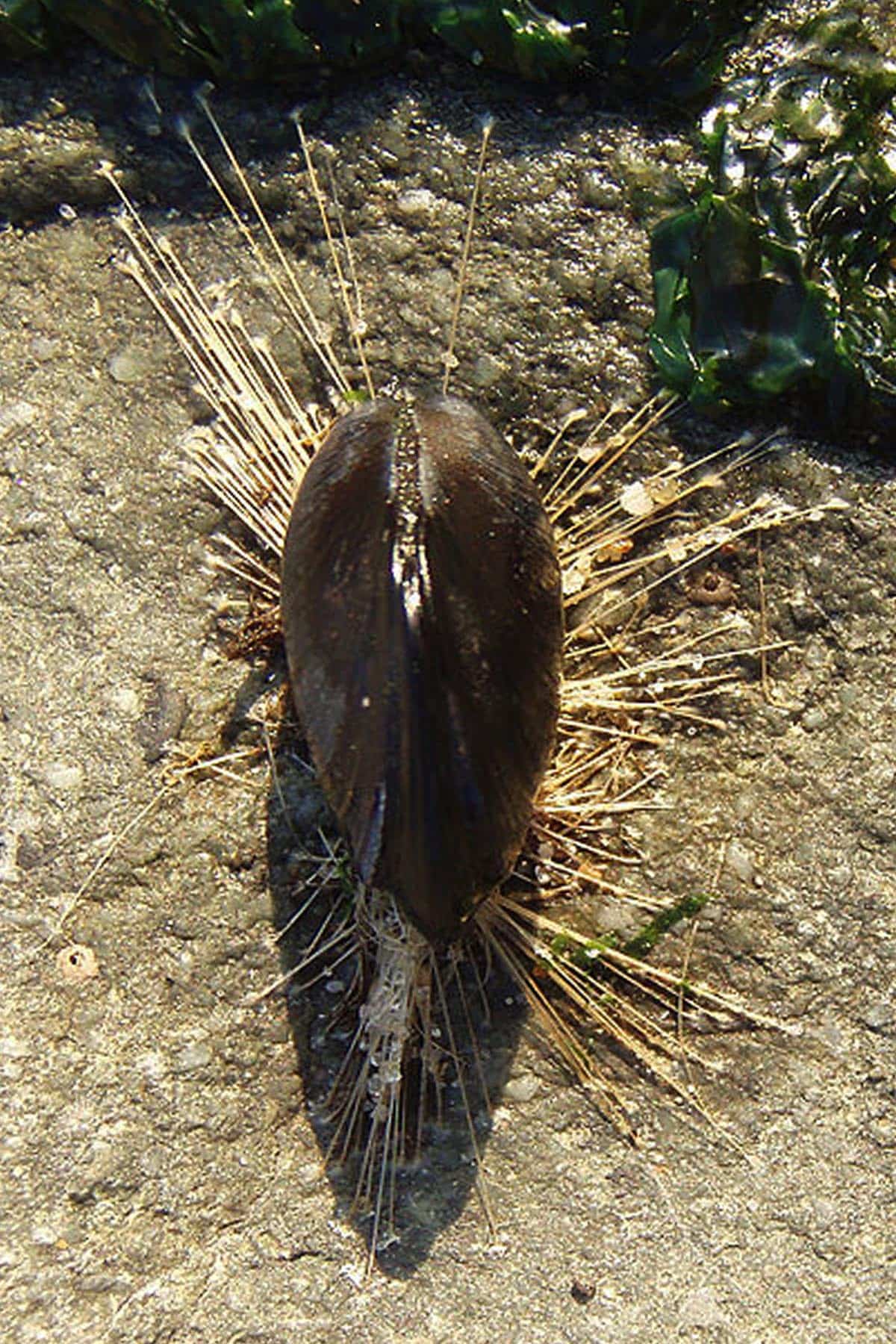
Lightweight, strong, and abundant along the French coast, this byssus offers enormous potential for the manufacture of bio-based and sustainable materials. The company Bysco has made this its guiding principle. Their mission: to transform this marine resource into a range of environmentally friendly products. This is part of a circular economy approach, from the collection of byssus to its transformation into finished products, including its reuse or recycling after use.
This is one inspiring example, among many, of how nature can provide sustainable solutions to our contemporary challenges.
At a time when the ecological transition is more urgent than ever, the mussels along our French coasts are proving to be valuable allies.