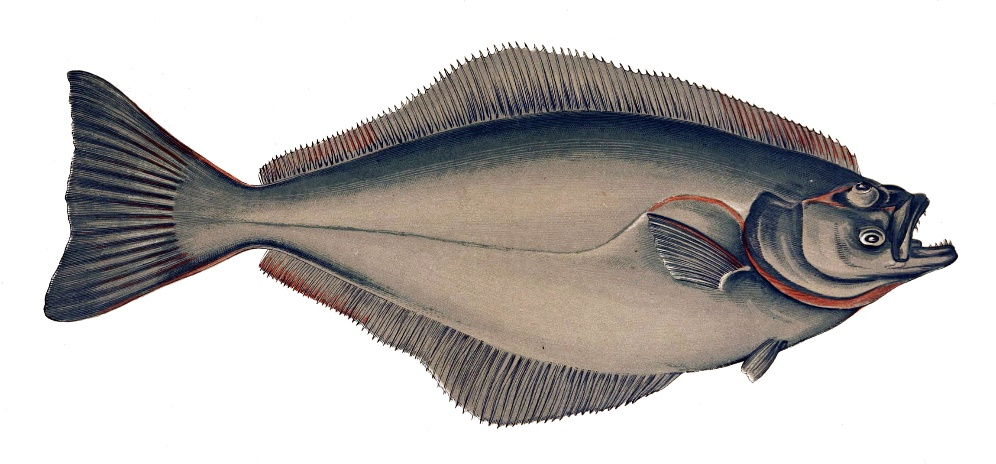
The Atlantic halibut, better known as the white halibut, is a species found in Saint Pierre and Miquelon. It belongs to the Pleuronectiformes family, along with flounder, sole, and turbot. With its flattened body, it is recognizable by the presence of its two eyes on the right side of its dorsal surface. It has coloring adapted to benthic life—that is, living on the seafloor—ranging from dark brown to gray-green, allowing it to hide from predators by burrowing into the sand or mud.
Considered one of the largest fish species, some Atlantic halibut have reached over 2.5 meters in length and weighed 300 kg. Nevertheless, the individuals usually encountered measure about 1 meter and weigh around 50 kg.
Did you know?
This species lives mainly in the cold, deep waters of the North Atlantic, ranging from the Bay of Biscay to southwestern Greenland. In many northern countries, it is a prized species with high commercial value. Its white, firm flesh makes it easy to cook and a favorite among all. Beyond its taste, Atlantic halibut also owes its popularity to its excellent nutritional qualities, being rich in: protein, vitamin D, vitamin B12…
History
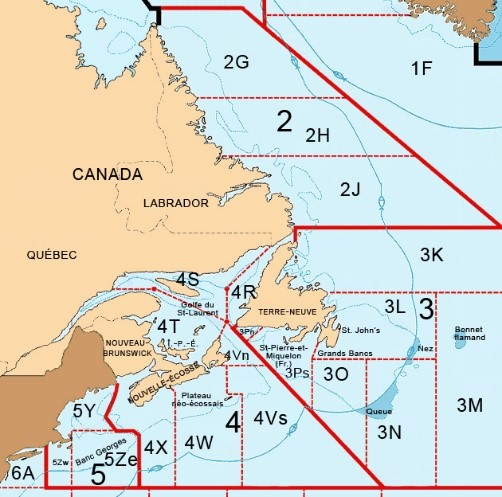
As early as 1988, various regulations were implemented to manage this fishery: a minimum size of 81 cm, a management plan, TAC (Total Allowable Catch), and more… After a difficult period in the 1990s, the latest assessments show an increase in biomass and a decrease in fishing mortality. Furthermore, the biomass of exploitable fish—that is, individuals larger than 81 cm—is growing rapidly.Since the summer of 2019, Atlantic halibut has appeared on Mr.Goodfish’s Overseas Lists for NAFO (Northwest Atlantic Fisheries Organization) fishing zones 3Ps, 4V, 4W, and 5Zc, which correspond to the maritime territories around Saint Pierre and Miquelon. In this part of the world, commercial fishing has been a long-standing tradition for many years.
With healthy stocks and a spawning season between December and March, the Mr.Goodfish program recommends Atlantic halibut this fall 2019.