Crustacean
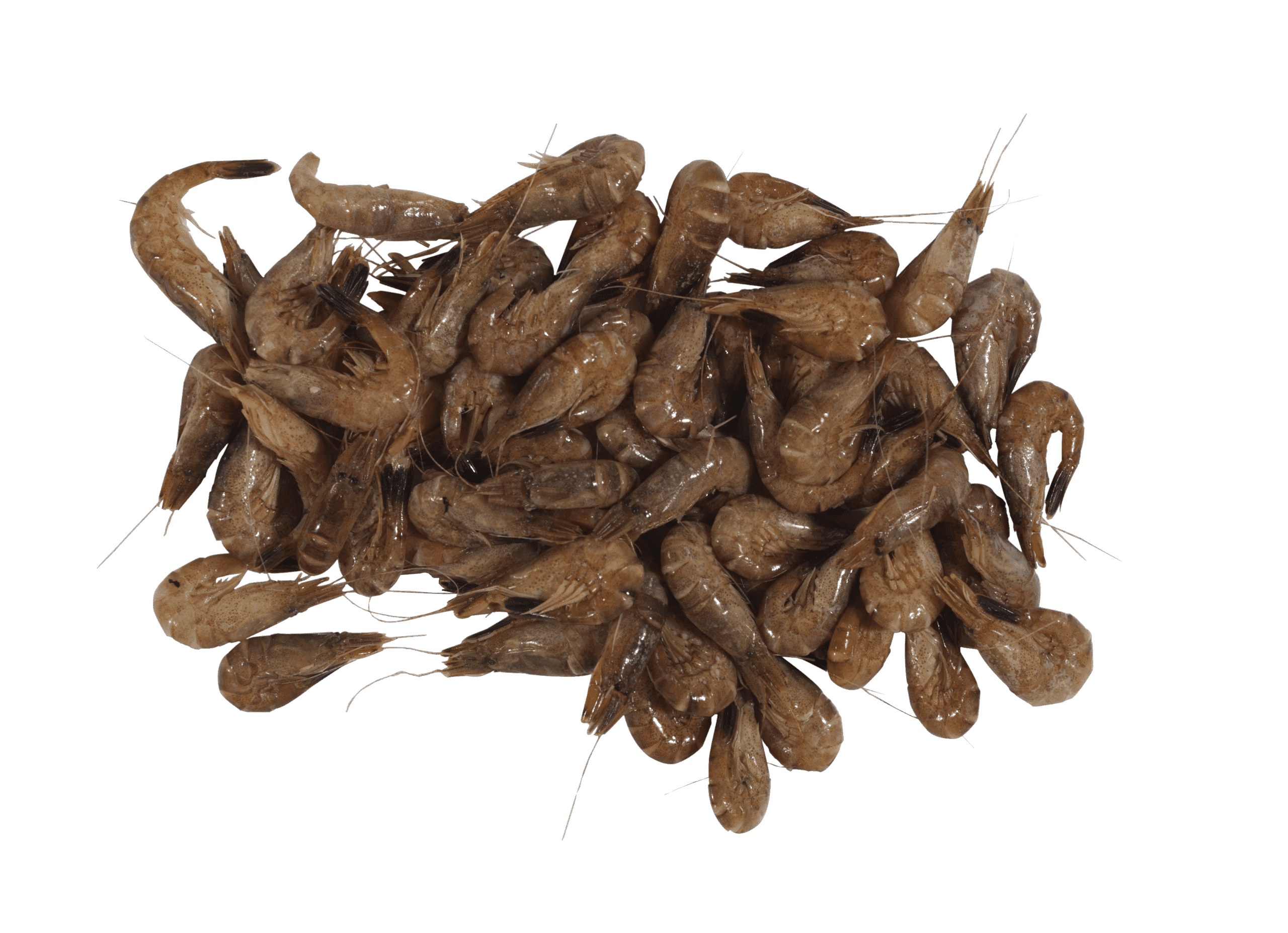
Common shrimp
Crangon crangon
(IV) North Sea, (VIId) Eastern English Channel
Fishing zones
Wild
Origin
5,4 cm
Minimum size
Description
It is a small shrimp with a body that is slightly flattened dorsoventrally. Unlike pink shrimp (Palaemonidae), it lacks a prominent, toothed rostrum between the eyes (which is very short and blunt). It has "false claws" (subchelicerate chelipeds) where the movable finger folds back onto a broad base, which is typical of the Crangonidae family. Its name comes from its sand-gray or translucent color, dotted with small brown spots. It possesses exceptional camouflage abilities (homochromy) that allow it to blend perfectly into the sediment. Its average size is 5 to 6 cm, but it can reach a maximum of 9 cm.
Habitat
This is a benthic species found exclusively in shallow coastal areas. It lives solely on sandy or silty bottoms. During the day, it remains buried in the sand, leaving only its antennae and eyes exposed to watch for prey (small worms, crustaceans) or detect predators. It is very active at night. It is found mainly in the intertidal zone and at depths of up to about 20 meters. It tolerates the brackish waters of estuaries very well.
Distribution
It is extremely widespread in the northeastern Atlantic. It is found from the White Sea (Russia) and Norway in the north to the coast of Morocco in the south. It is present in the Mediterranean Sea and the Black Sea, but it is particularly emblematic of the North Sea, the English Channel, and the Bay of Biscay, where it is the subject of a very significant commercial fishery.