Fish
Tusk
Brosme brosme
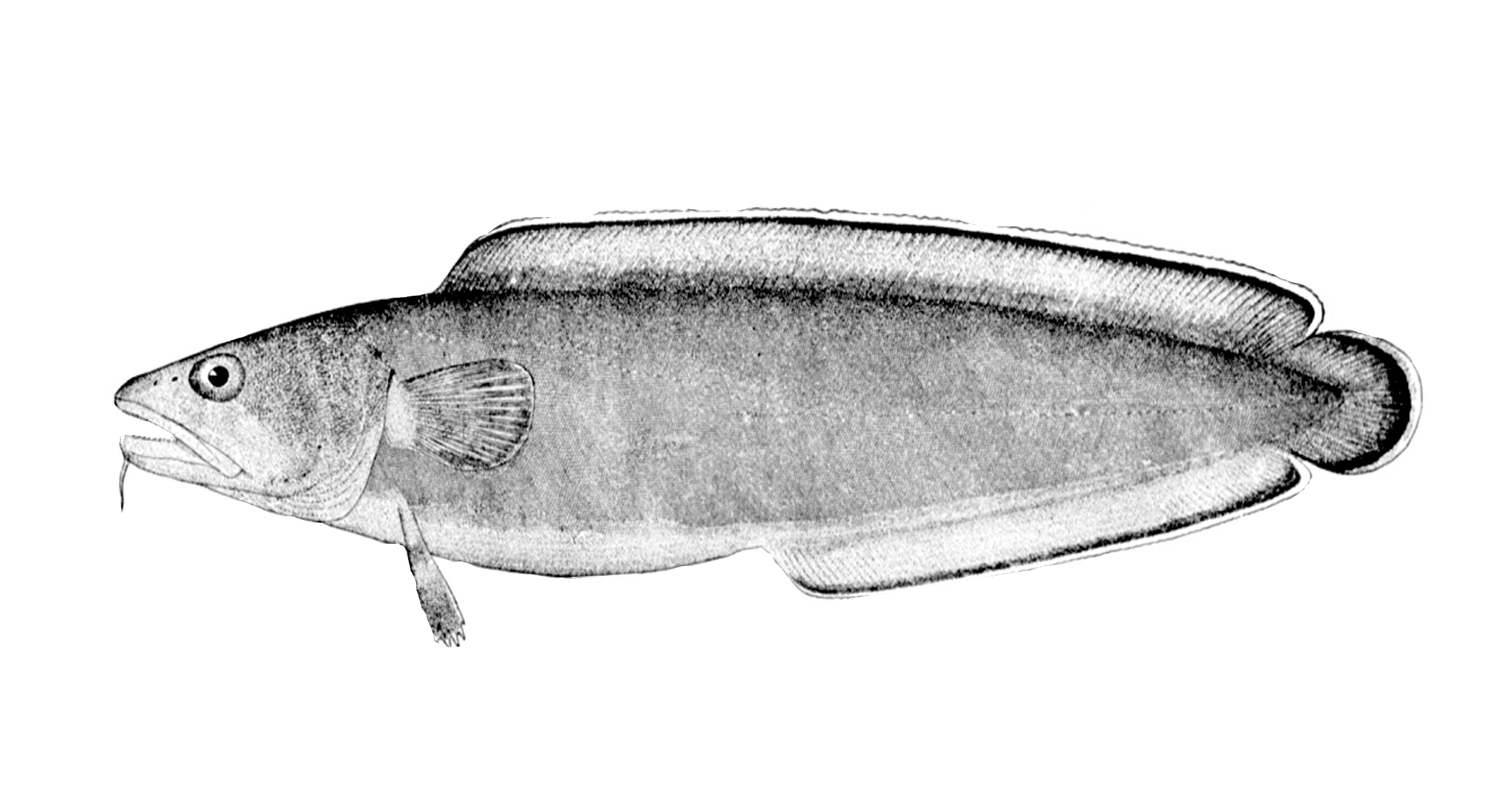
(Va) Icelandic Waters, (XIV) East Greenland
Fishing zones
Wild
Origin
50 cm
Minimum size
Description
The tusk is easily recognizable because it is the only member of the Gadidae family (the cod family) to have a single, very long dorsal fin that extends across almost its entire back. Its body is elongated and robust. Its head is broad, with a lower jaw featuring a single, well-developed barb (a "whisker"). Its coloration varies depending on its habitat, ranging from reddish-brown to slate gray or greenish-brown on the back, lightening to white or cream on the belly.
Habitat
It is a bottom-dwelling (demersal) fish that prefers hard, uneven substrates (rocks, gravel, pebbles). It is rarely found on sand or fine silt. It generally lives at depths of 100 to 500 meters, although it can go down to 1,000 meters. It prefers cold waters, typically between 0°C and 10°C.
Distribution
It is found from the northern British Isles and the North Sea as far south as Iceland, Norway, Spitsbergen, and the Murmansk coast in Russia. It is also found in the English Channel, though less commonly. Its range extends from southern Greenland to New Jersey (United States), including the Grand Banks of Newfoundland and the Gulf of Maine.