Crustacean
Snow crab
Chionoecetes opilio
(I) Barents Sea
Fishing zone
Wild
Origin
5,4 cm (lc)
Minimum size
Description
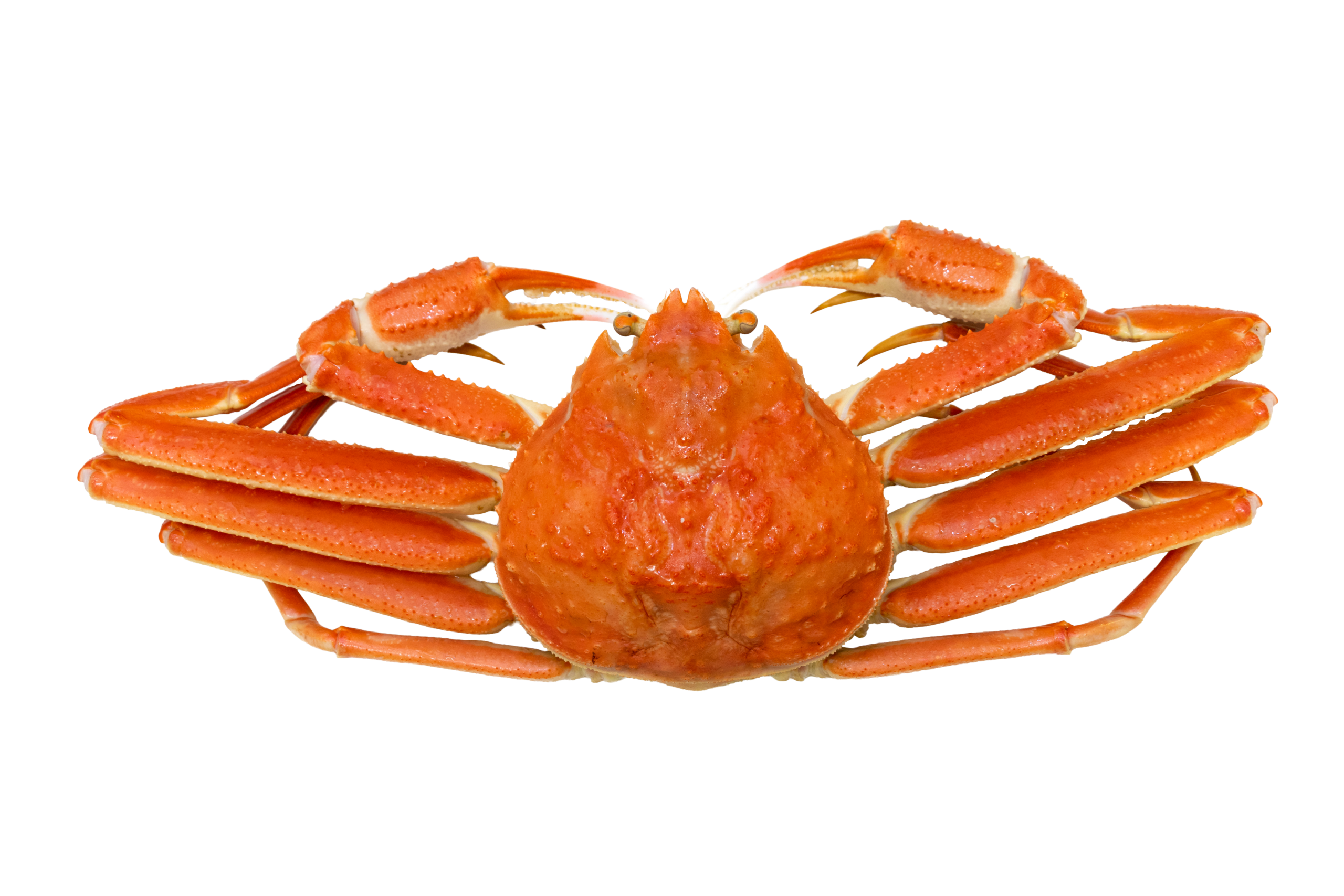
The snow crab is a benthic decapod crustacean characterized by a relatively flattened body and a rounded carapace, extended by five pairs of long, slender legs, the first of which is equipped with claws. Its maximum recorded carapace width is approximately 13.7 cm.
It is a species adapted to cold waters, exhibiting opportunistic feeding behaviors and even capable of cannibalism.
It is a species adapted to cold waters, exhibiting opportunistic feeding behaviors and even capable of cannibalism.
Habitat
It is a benthic species that lives on the seafloor.
It inhabits mainly soft substrates (mud, sand), but also gravelly or mixed substrates. It is found at depths ranging from 4 to 1,400 m, most commonly between 100 and 300 m. It inhabits cold boreal waters, generally between -1 °C and 10 °C, with a preference for around 3 °C. This species is therefore typical of the cold, deep environments of continental shelves.
It inhabits mainly soft substrates (mud, sand), but also gravelly or mixed substrates. It is found at depths ranging from 4 to 1,400 m, most commonly between 100 and 300 m. It inhabits cold boreal waters, generally between -1 °C and 10 °C, with a preference for around 3 °C. This species is therefore typical of the cold, deep environments of continental shelves.
Distribution
The snow crab is a species widely distributed in the cold regions of the Northern Hemisphere, in the North Atlantic, North Pacific, and Arctic Oceans, within the boreal to polar biogeographic zones.
It has also been introduced into certain areas, such as the Barents Sea and the Kara Sea. Its range generally extends from approximately 29°N to 79°N.
It has also been introduced into certain areas, such as the Barents Sea and the Kara Sea. Its range generally extends from approximately 29°N to 79°N.