Fish
Grey gurnard
Eutrigla gurnardus
Out of season
—
Fishing zones
Wild
Origin
24 cm
Minimum size
Description
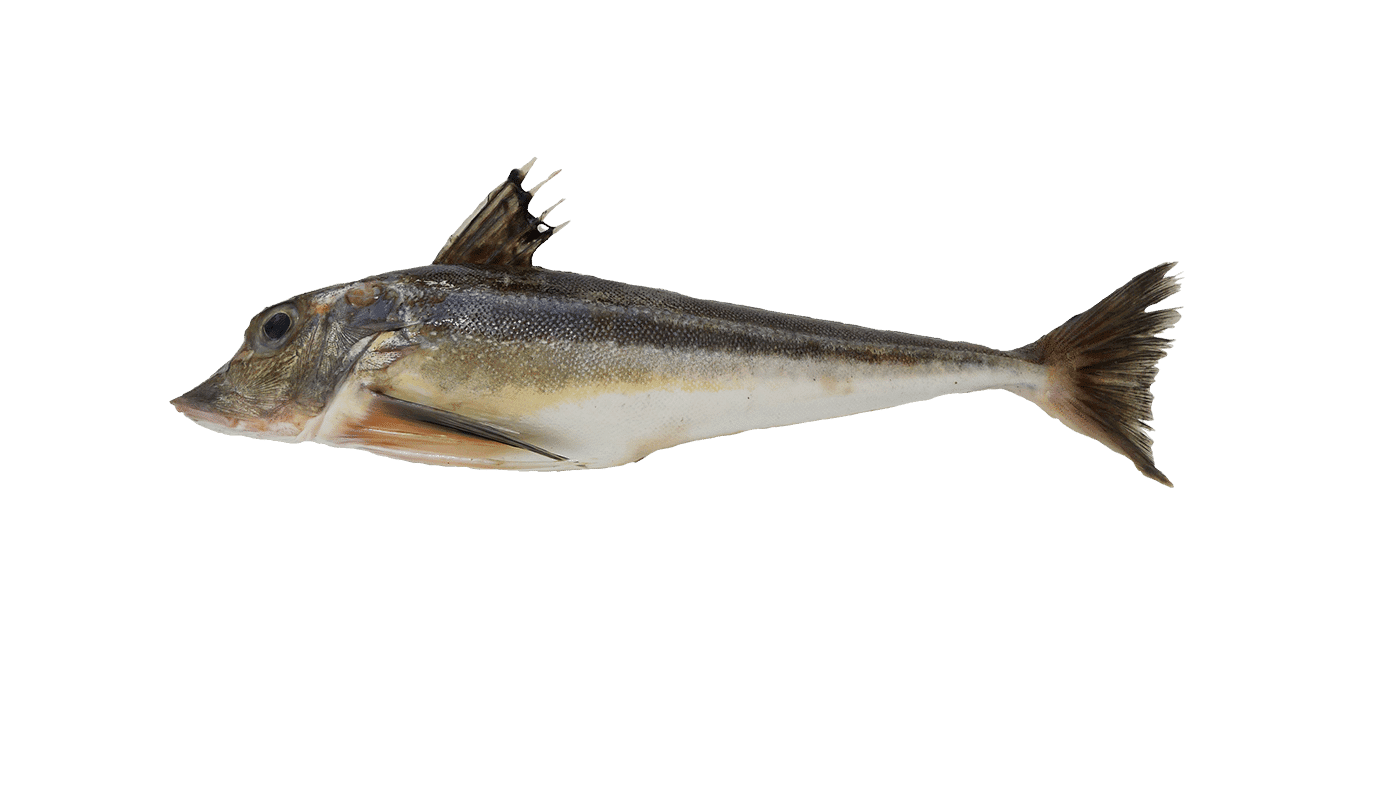
Like all Triglidae, it has a massive head reinforced by bony plates. Its snout is short and ends in two small points. The first three rays of its pectoral fins are free, jointed, and movable. They serve as sensory organs to detect prey in the sediment and allow the fish to walk along the bottom. This is the primary identifying feature. The lateral line is lined with sharp bony plates (scales), making it very rough to the touch. The back is generally gray-brown, sometimes greenish, dotted with small white spots. The belly is silvery white. Unlike the red gurnard, its pectoral fins are not edged with bright blue. Its average size is 25 to 30 cm, but it can reach a maximum length of 60 cm.
Habitat
It is a demersal fish that inhabits the continental shelf. It prefers sandy, muddy, or gravelly bottoms, where it can use its free rays to scavenge the seabed. It is found from the coast down to depths of about 150 meters, although it can occasionally descend to 300 meters. It is a voracious predator that feeds on small fish (sand eels, gobies), shrimp, and crabs. It is known to produce sounds (grunts) by vibrating its swim bladder when stressed or captured.
Distribution
It is extremely abundant in the North Sea, the English Channel, and the Bay of Biscay. It is also found throughout the Mediterranean Sea (although somewhat less common than the red gurnard) and in the Black Sea. It is found from Norway and Iceland to the coasts of Morocco and Mauritania in the south.