Shellfish
Farmed flat oyster
Ostrea edulis
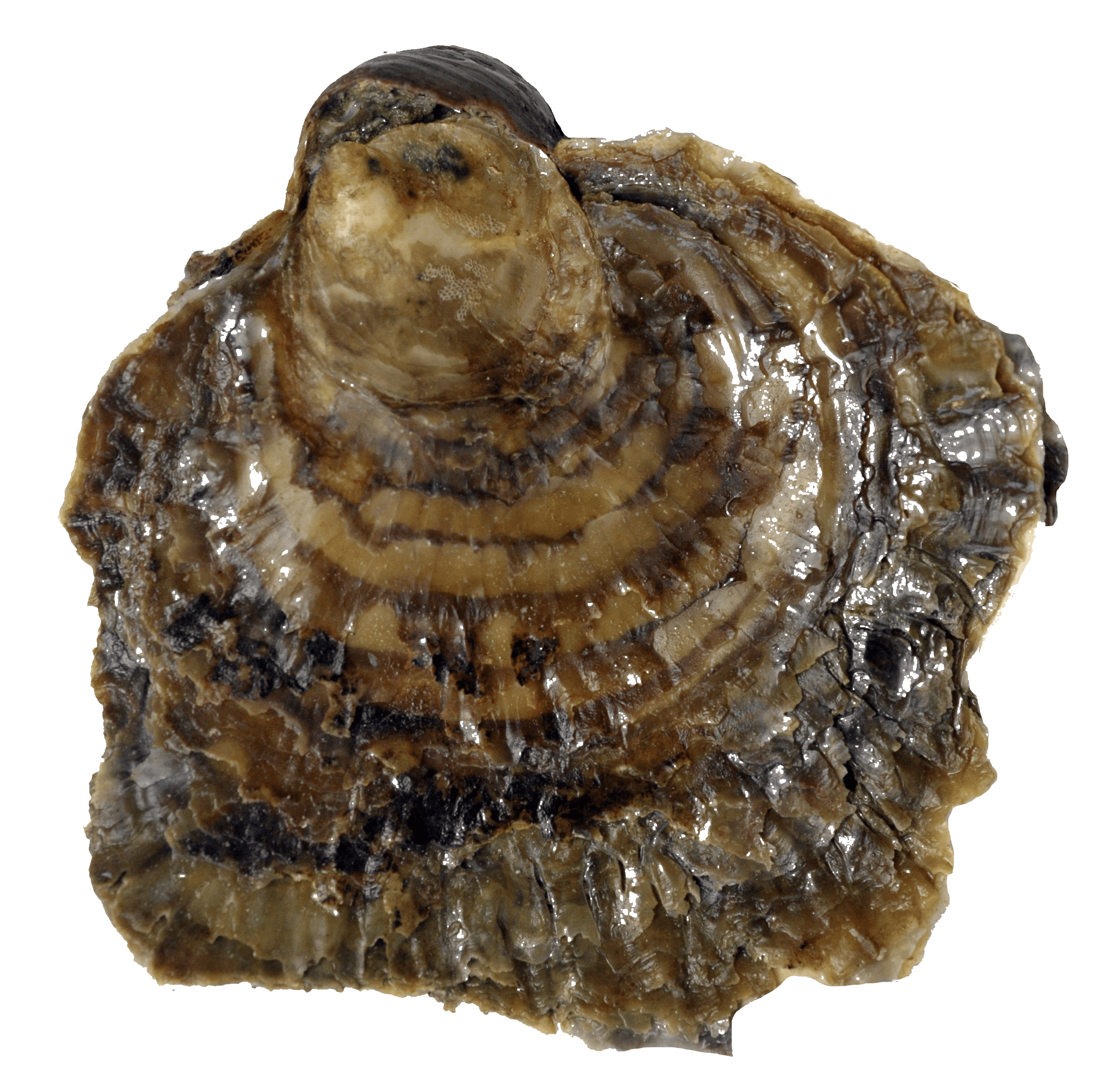
—
Fishing zones
Livestock farming
Origin
—
Minimum size
Description
Its shell is circular or oval in shape, more regular than that of the Pacific oyster. The two valves are different: the left (lower) valve is slightly concave, while the right (upper) valve is flat and acts as a lid. The surface consists of thin, overlapping calcareous lamellae, lacking the large, serrated ridges typical of the Japanese oyster (Magallana gigas). Its color ranges from cream-gray to light brown, sometimes with purplish or greenish hues. The interior is a pure pearly white. In aquaculture, it is generally sold at 7 to 10 cm, but it can reach 20 cm in the wild.
Habitat
It is a sessile (fixed) bivalve mollusk that lives in coastal waters and estuaries. It attaches itself to solid surfaces (rocks, old shell debris) or lives on sandy or gravelly bottoms. It is found from the intertidal zone (foreshore) down to a depth of about 20 meters, although it prefers calm, sheltered waters. Farming (Oyster Farming): Unlike the Pacific oyster, which is often farmed on raised bags, the flat oyster is traditionally farmed on the seabed (flat) in deep-water farms or subtidal zones.
Distribution
In France, it is now mainly farmed in Brittany (particularly in Quiberon Bay and the Belon River) and, to a much lesser extent, in the Arcachon Basin and the Mediterranean (Étang de Thau).