Introduction, Role, and Overview of the Committee
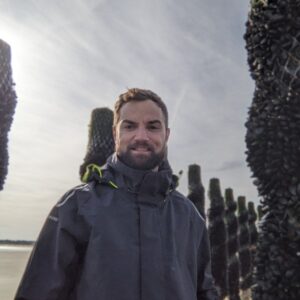 My name is Paulin Leconte. I trained as an ecologist and gradually shifted my focus to environmental project management, first in public works, then in the mobility sector, and finally in the aquaculture industry. As the Hauts-de-France Project Manager for the Normandy/Hauts-de-France Regional Shellfish Farming Committee since 2018, I have multiple responsibilities, all of which share the common goal of representing and defending the general interests of regional shellfish farming businesses. It is a private organization with a public service mission.
The CRC Normandy/Hauts-de-France participates in or leads initiatives focused on topics such as:
- the management and development of shellfish farming activities in the Public Maritime Domain,
- protecting water quality and the quality of shellfish products,
- scientific and technical research,
- the marketing and promotion of shellfish products,
- socio-economic studies and outlooks,
- providing information to professionals and partners,
- education and vocational training,
- social and tax legislation.
What are the current and future challenges facing shellfish farming
and mussel farming?
Today, the main challenge is to maintain and improve the quality of coastal waters to reduce the economic and ecological vulnerability of businesses, while ensuring proper management of food safety and improved sanitary conditions within businesses (protection of consumers and professionals working in open environments); all with the goal of restoring shellfish farming waters to optimal quality.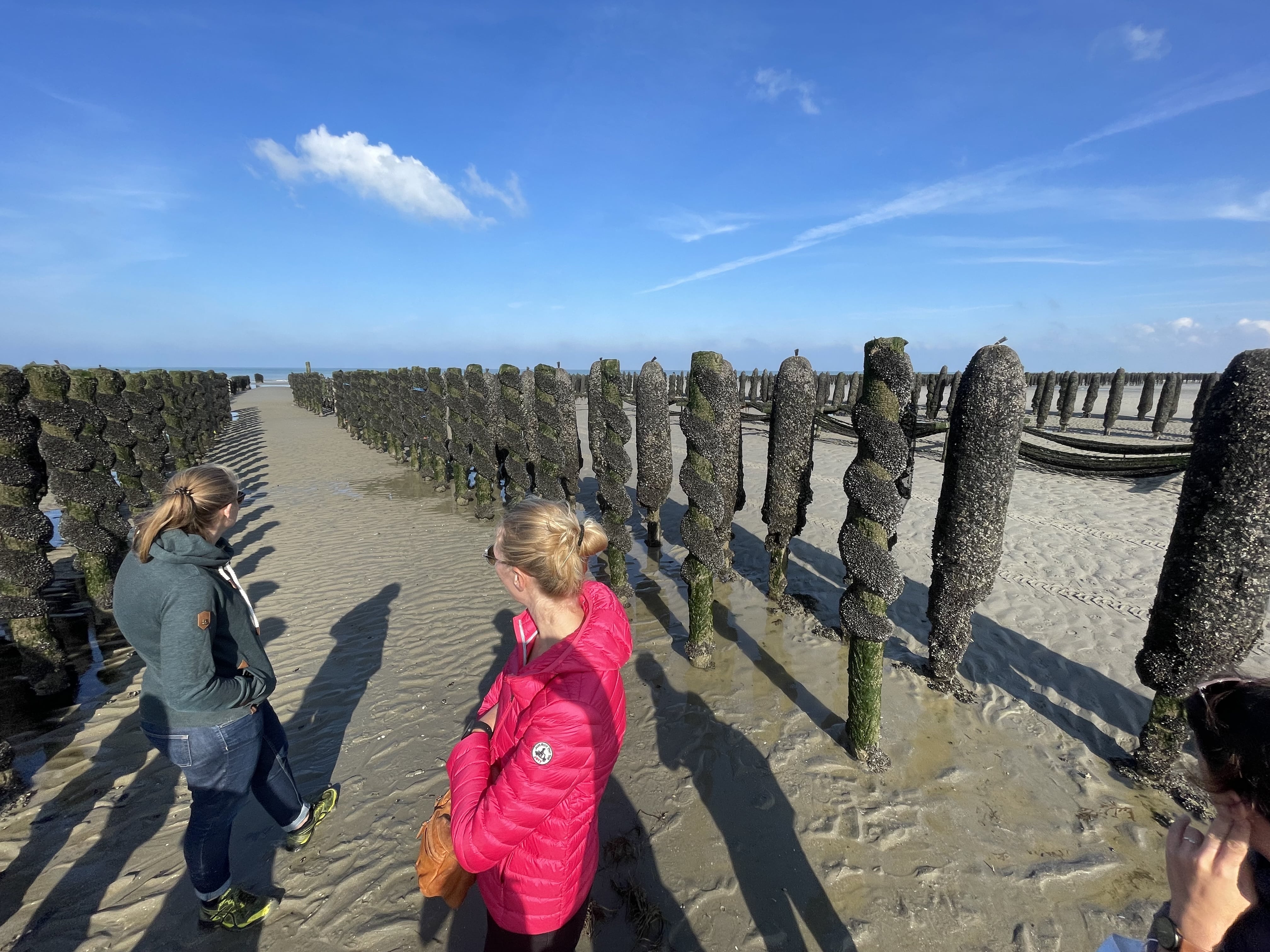
It is also essential to manage the environment, natural habitats, and production in a rational and sustainable manner, reinforcing the fundamental role of shellfish farming in the region. In particular, we strive to ensure that shellfish farming is integrated into its natural environment, minimizing its ecological footprint as much as possible, and respecting other coastal uses in the region.
In the coming years, climate change poses a major challenge for the shellfish industry and will require the sector to adapt.
How should we approach the adaptations—undoubtedly necessary—
that professionals will need to implement?
If we focus specifically on climate change, it is important to maintain, sustain, and adapt the various monitoring and observation networks to anticipate changes: temperature, trophic conditions, health and animal health risks, new predators…
Depending on significant changes, we will then need to support businesses in adapting to new operating conditions. We can already anticipate a shift of farms further offshore to benefit from better water quality and to limit temperature increases, as well as a diversification of aquaculture (mussels, oysters, seaweed, burrowing shellfish).
The Hauts-de-France region accounts for approximately 5% of national mussel production and offers significant potential for the development of shellfish farming. We are fortunate to currently be in a transition phase between two generations. A strong drive to start new businesses, take over family farms, expand, diversify, and enhance production quality points to the sector’s growing influence in the region in the years to come.
What can you say to inspire young people to take an interest
in the specialized skills of shellfish farming and mussel farming?
Part farmer, part sailor, the men and women working in this industry are artisans of the sea. Combining patience and meticulousness, shellfish farming is (contrary to appearances) truly a work of art! Committed and passionate, shellfish farmers proudly cultivate the flavors of their region. As advocates for local products, they are also fervent defenders of the environment, acting every day with respect for the land and the sea.
Here are MOUL’TES reasons to join the shellfish farming industry:
- I work outdoors, facing the sea!
- I take care of nature and living things!
- I’m inheriting a unique craft!
- I take pride in raising high-quality products!
- I’m never bored—I live to the rhythm of the tides!
- No seasickness: I keep my feet on the ground!
- I get exercise (without even realizing it)!
- I can grow and evolve over the years!
- I cultivate a love of sharing and camaraderie!

Oysters or mussels?
Why choose between two exceptional products that are good for the sea and good for the consumer? In addition to being good for your health (rich in protein and trace elements), shellfish farming has beneficial effects on the environment, particularly thanks to its role as an ecosystem indicator and its very low carbon footprint.
What’s new in the industry?
The start of 2024 was marked by a change in our organization’s name and logo. In fact, for consistency and with the aim of increasing the visibility of the Hauts-de-France sector on a national scale, our organization is now called: Regional Shellfish Farming Committee of Normandy / Hauts-de-France (CRC NHDF)*!
*(Formerly Regional Shellfish Farming Committee of Normandy – North Sea)
From a more operational perspective, since 2022 the CRC NHDF has been implementing vulnerability profiles for shellfish farming areas and professional shore fishing zones in collaboration with the Hauts-de-France Fisheries Committee and the Artois-Picardie Water Agency. Vulnerability profiles are studies designed to provide, for each watershed, insights into the sources of pollution likely to impact shellfish production areas and/or shore fishing areas.
To this end, the goal is to identify the sources and flows of microbiological pollution (point-source discharges from urban and rural areas, non-point-source pollution linked to livestock farming and on-site sewage treatment systems within the catchment areas of upstream watersheds and along the coastline) and the factors influencing them (meteorological conditions, hydrodynamics, current patterns, etc.), and to define exposure scenarios for pollution risks and the measures to be taken to reduce these risks.
The profile will enable the establishment of priorities for remedial and preventive work and the exploration of avenues for optimizing water uses with the aim of improving the sanitary quality of coastal waters.