What is whiting?
Smaller than cod, it nevertheless belongs to the same large family, the Gadidae. It is a very good alternative, both in terms of taste and cost, to those fish whose stocks are, for the most part, now overfished.
Unlike last season’s mullet, whiting (Merlangius merlangus) is the only species of its kind. This medium-sized species (23.5 cm) is primarily caught along the coasts of the English Channel/North Sea and Brittany/Atlantic.
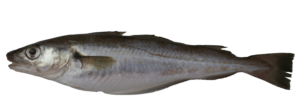
It is easily recognizable by the black spot at the base of its pectoral fin, its prominent upper jaw, and its iridescent yellow sheen.
Although less well-known to consumers than other species of gadids, whiting is nevertheless a widely landed species and therefore one to be valued! Its delicate flesh is similar to that of its cousin, the haddock.
Its English name, whiting, derives from the color of its flesh, which is white. A common French expression refers to this fish: “faire des yeux de merlan frit” (to roll one’s eyes, showing the whites).
You may also have heard of blue whiting? This species is heavily targeted by the fishmeal industry to supply the fish processing sector (oil, meal), particularly for animal feed. The small portion intended for human consumption is also processed into surimi.
Did you know?
When young whiting reach a size of 23 mm, they enter a new stage of their pelagic life during which they form a commensal relationship1 with jellyfish.
1 An association of individuals in which the host provides benefits to the commensal (the individual that benefits from the association) without receiving anything in return. This is a positive interaction with non-reciprocal benefits.