Fish
Poisson
Thicklip grey mullet
Chelon labrosus
(GSA7) Gulf of Lion, (GSA8) Corsica
Fishing zones
Wild
Origin
35 cm
Minimum size
Description
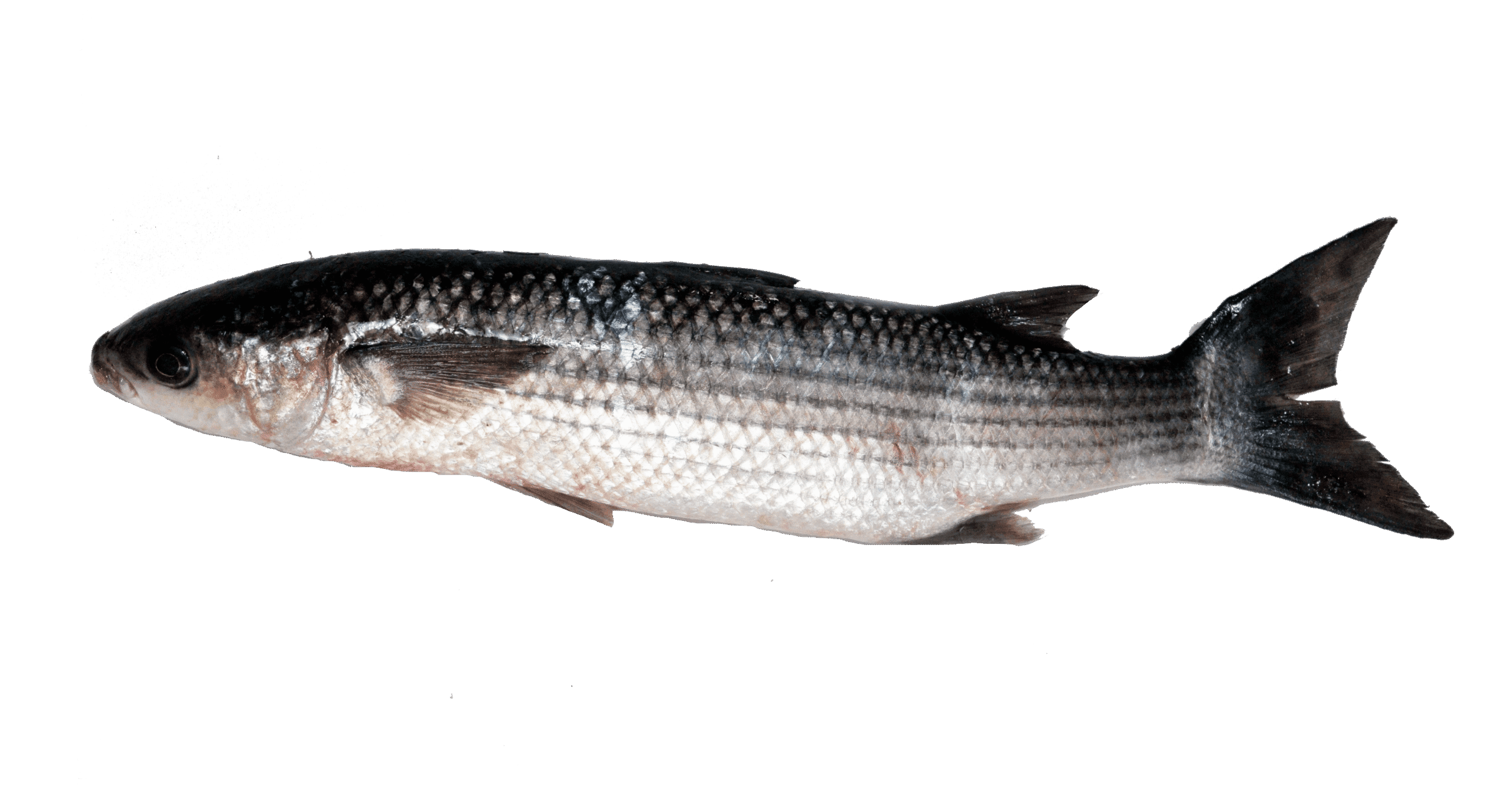
The thicklip mullet is easily recognizable by its distinctive physical characteristics. Its body is elongated, spindle-shaped, and stocky, bluish-gray on the back, becoming silvery on the sides with 7 to 9 dark longitudinal stripes. Its belly is silvery-white. Its head is massive and flattened on top. Its main characteristic is its very thick upper lip, which bears 2 to 5 rows of small papillae (warts) on its underside. The average size is around 32 cm, but it can reach a maximum length of 75 cm (or even 90 cm in exceptional cases) and weigh up to 4.5 kg. It has two well-separated dorsal fins (the first with 4–5 spiny rays) and a notched (forked) caudal fin.
Habitat
It is a demersal fish that lives primarily in coastal marine waters, but it is highly tolerant of variations in salinity (euryhaline). It is frequently found in estuaries and brackish lagoons and can even swim upstream into freshwater rivers. It prefers soft substrates (sand, mud, pebbles) and rocky areas, as well as human structures such as ports and breakwaters. It generally inhabits depths between 0 and 15 meters. Omnivorous, it grazes the bottom or walls to feed on benthic diatoms, algae, small invertebrates, and organic detritus. Juveniles feed on zooplankton.
Distribution
The species is widely distributed throughout the northeastern Atlantic and adjacent seas. In the north, it is found off Iceland, the Faroe Islands, and southern Norway. In the south, its range extends as far as Senegal and the Cape Verde archipelago. In inland seas, it is found throughout the Mediterranean Sea and the Black Sea basin. To the west, the Azores archipelago appears to mark the western limit of its range.