Fish
Sand sole
Pegusa lascaris
Out of season
—
Fishing zones
Wild
Origin
22 cm
Minimum size
Description
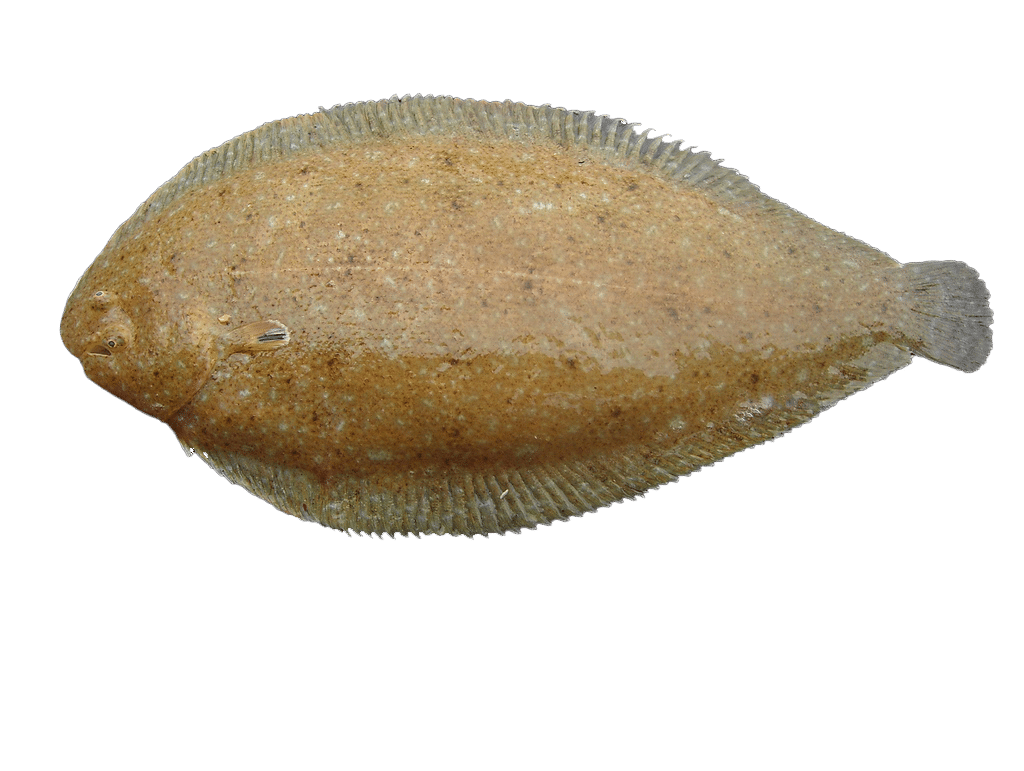
Oval, flat body. Like most soleids, it is a "right-eyed" fish (both eyes are on the right side). The nostril on the blind side (the side facing the bottom) is enlarged, rosette- or flower-shaped, and surrounded by a fringe of small tentacles. This is the main distinguishing feature that sets it apart from the common sole. The eye side is generally sandy, light brown, or yellowish in color, dotted with small dark spots or white dots. The pectoral fin on the eyed side often has a central black spot surrounded by a light ring. It generally measures between 20 and 30 cm, with a maximum recorded size of around 40 cm. It feeds mainly on small benthic invertebrates, such as crustaceans (amphipods, shrimp) and bivalve or polychaete worms.
Habitat
A marine and benthic species (living on the seafloor). It sometimes ventures into the brackish waters of lagoons. It is found primarily at depths of 5 to 50 meters, although it can descend to depths of up to 350 meters in certain regions. As its English name (sand sole) suggests, it prefers sandy or fine gravel bottoms, into which it burrows.
Distribution
It has a fairly wide distribution in the eastern Atlantic, ranging from the southern North Sea and the English Channel to the Gulf of Guinea. It is very common throughout the Mediterranean Sea and is also found in the Sea of Azov and the Black Sea. It has been reported along the African coast as far south as South Africa.