Fish
Leaping mullet
Liza saliens
Out of season
—
Fishing zones
Wild
Origin
22 cm
Minimum size
Description
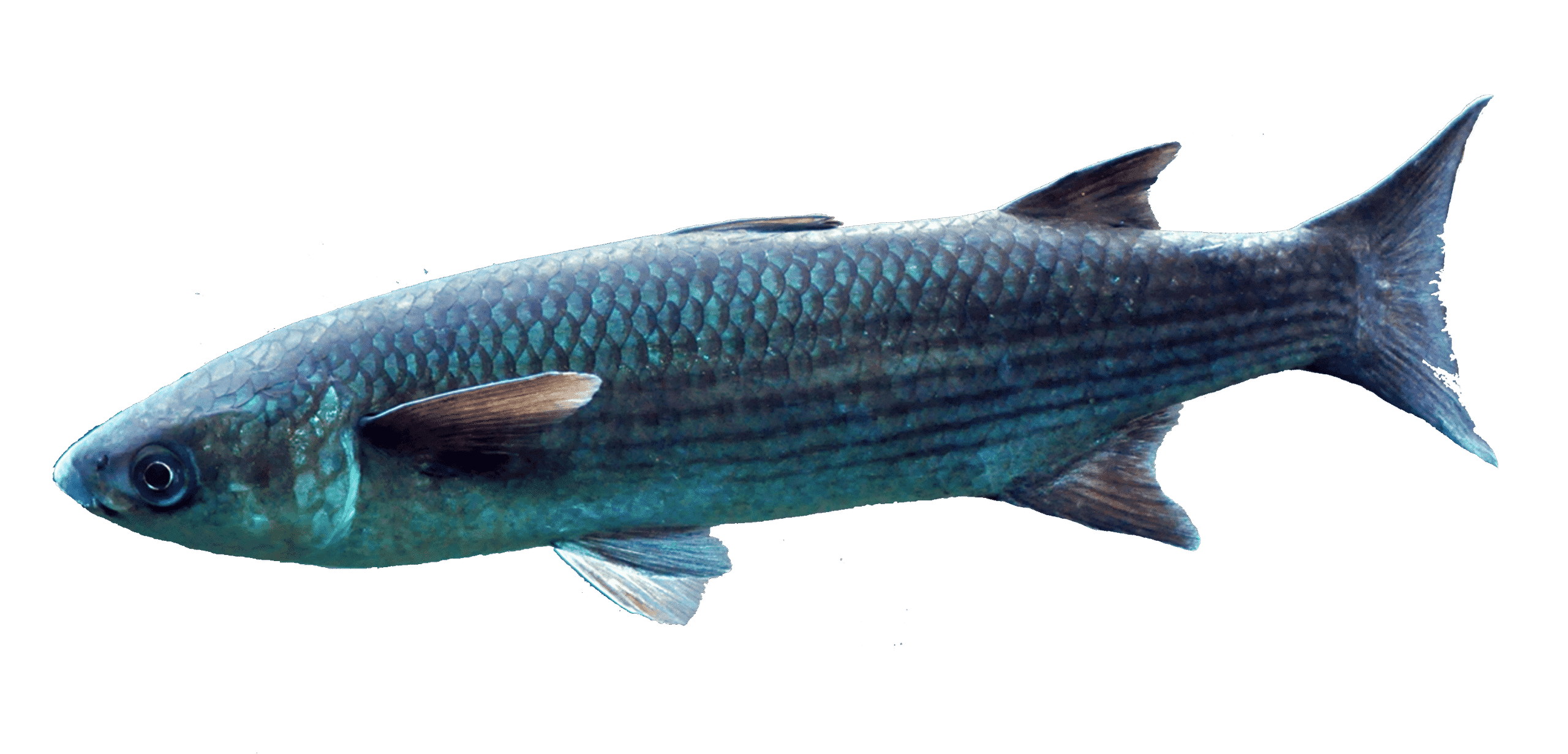
The body is spindle-shaped and moderately compressed. The head is broad and flat between the eyes. The upper lip is thin and lacks papillae. It has two well-separated dorsal fins: the first with 4 hard spines and the second with 1 spine and 8 to 9 soft rays. The back is bluish-gray to dark gray, the sides are silvery, and the belly is white. Golden spots are often observed on the gill covers (cheeks). Its typical size is around 30 cm, but it can reach a maximum size of 40 cm. The Leaping mullet feeds mainly on microscopic organisms (diatoms, algae), organic detritus found in the mud, and small benthic invertebrates.
Habitat
A catadromous species (lives mainly in the sea but migrates to freshwater or brackish water). It is benthopelagic (lives between the open water column and the seabed). It is found in coastal marine waters, lagoons, and estuaries, and frequently enters rivers. It is highly euryhaline (tolerates wide variations in salinity) and eurythermic (tolerates temperature variations). It prefers sandy or muddy bottoms rich in vegetation.
Distribution
From the Bay of Biscay to Morocco, including the Canary Islands. In inland waters, it is very common throughout the Mediterranean Sea and the Black Sea. The species was successfully introduced into the Caspian Sea in the 1930s, where it is now well established.