Algae
Laver
Porphyra umbilicalis
(VIIIa) Bay of Biscay - North, (VIIIb) Bay of Biscay - Central
Fishing zones
Wild
Origin
25 cm
Minimum size
Description
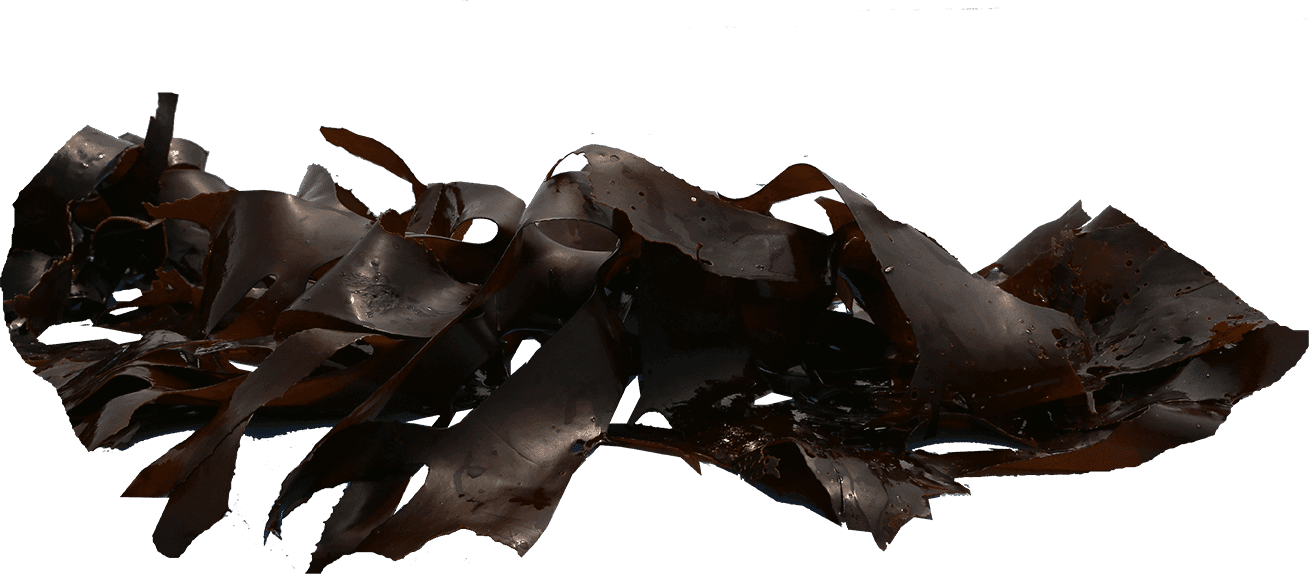
It is a reddish-brown to purplish-brown algae whose thallus (the body of the algae) forms a very thin and delicate sheet, often compared to a sheet of tissue paper. It has the unique characteristic of being composed of only a single layer of cells (monostromatic), which gives it its translucent and fragile appearance. It is often disc-shaped or lobed, attached to the rock by a small central holdfast (hence its name umbilicalis, evoking a navel). It can grow to about 20 to 25 cm in length. It turns from dark purple to black when it dries on the rocks at low tide, but becomes supple and translucent again upon contact with water. It is known worldwide by its Japanese name, Nori, and is used in sushi. In Wales, it is the main ingredient in traditional laverbread. It is extremely rich in protein (up to 47%), vitamins (A, B12, C), and minerals.
Habitat
Nori lives in the intertidal zone (the area affected by the tides), primarily in the middle intertidal zone. It attaches itself to hard substrates such as wave-beaten rocks, jetties, or sometimes to the shells of mollusks (limpets, mussels). It is an extremely hardy species that can withstand long periods of emersion and desiccation (it can lose up to 70% of its moisture and still survive).
Distribution
Very common along the coasts of Europe, from Norway to Portugal, including the British Isles and France (particularly Brittany). It is also found in certain areas of the Mediterranean and the Southern Hemisphere, although the greatest diversity of species in the genus Porphyra is found in cold temperate and boreal waters.