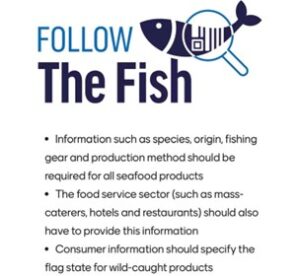
On December 3, 2024, Mr. Goodfish 3.0 participated in an event organized by Oceana in Europe at the European Parliament in Brussels, Belgium. The event was hosted and moderated by Thomas Bajada, an S&D Member of the European Parliament from Malta, who led an inspiring discussion on transparency and sustainability in seafood labeling. This initiative, called “Follow the Fish,” takes its name from an existing movement that aims to tell EU policymakers that people want to know where the fish they buy comes from, what species it is, how it was caught, and the country of registration of the vessel, and that this information should be available for all seafood products.
The initiative aims to empower consumers by ensuring transparency at every stage of the seafood supply chain, making it possible to track fish from the waters where it was caught to the moment it is served on our plates.
Voices from the Seafood Supply Chain
To explore this crucial topic, experts from different countries and industry sectors were brought together, representing every stage of the seafood supply chain. Their diverse perspectives helped paint a comprehensive picture of the challenges and opportunities related to transparency:
Small-scale fishermen: Marta Cavallé, Executive Secretary of Low Impact Fishers of Europe, emphasized the importance of fishing in a way that respects ecosystems. She highlighted the need for a fair and transparent value chain that rewards low-impact practices and provides consumers with high-quality seafood. She noted that EU regulations remain unclear regarding basic food information and emphasized our goal of providing high-quality products in a more sustainable and low-impact manner. Her remarks helped us understand how essential a more transparent value chain is for making smarter, more responsible choices regarding food consumption. The long-term benefits of this vision are as follows:
- being more visible and competitive
- Achieving fair market access and making the market more transparent and better aligned with real needs
- Enabling consumers to understand what they are eating and the benefits they derive from their meals.
Seafood Retailers: María Luisa Álvarez Blanco, Executive Director of FEDEPESCA, explained how digitization could improve traceability in seafood markets. She emphasized that greater transparency—particularly in restaurants and foodservice (HORECA)—would enable consumers to make more informed choices.
She emphasized that information is still shared on paper today and that the HORECA sector does not use this information properly, providing consumers with a product that does not meet their needs.
Another key point of her presentation was the importance of the information provided to consumers. She noted that more information would help explain price differences, but this issue remains hindered by large companies that do not want to lose their competitive advantages.
In this regard, it is important to work on product labeling and provide consumers with the necessary information, as this will certainly lead them to make more responsible and informed choices, both for themselves and for society.
Seafood Companies: Irene Kranendonk, Head of Impact at Fish Tales, spoke about the power of storytelling in the seafood sector. Sharing details about where and how seafood is caught helps bring consumers closer to fishermen and highlights the importance of sustainability.
She shared with us the example of Fish Tales’ own products, emphasizing the importance of specific information when it is shared and that it is the brand’s responsibility to show what is in their product.
Furthermore, she noted that consumers are not the only ones to benefit from these best practices in transparency; fishermen benefit as well. People in the industry like to know what goes into a specific product, as they generally don’t have the opportunity to see what happens beyond their own fishing activities. This helps us understand just how vital transparent and sustainable information sharing is for the entire seafood supply chain.
Chefs: Danielle Leoni, a chef and advocate for responsible seafood, discussed the challenges chefs face in sourcing sustainable seafood due to a lack of accessible information. She emphasized the need for clear labeling to allow chefs to serve seafood with pride and in a sustainable manner. She noted that this is where policy comes into play, with the need to simplify access to information because chefs do not have “the time and money” to pay attention to the fact that greater transparency is necessary.
Danielle says that as a chef herself, she wants to be able to take pride in her sourcing and know where the seafood comes from. Chefs also have a role in ensuring sustainability, and therefore they should be encouraged to be curious and ask questions about it.
Ultimately, the more chefs are trained to obtain and ask for information about the seafood they prepare, the more sustainable and transparent the meals served to consumers will be.
The Challenge of Transparency
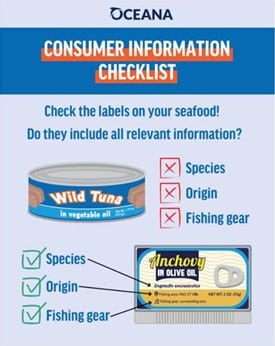
The discussion highlighted several key issues that need to be addressed urgently:
- Gaps in traceability: Nearly 70% of the seafood consumed in the EU is imported, and essential information such as species, origin, or fishing method is often missing.
- Labeling in restaurants: Unlike supermarkets, restaurants and food service establishments are not required to label seafood, which deprives diners of the tools needed to make informed decisions.
- Inequalities in the supply chain: Small-scale fishermen are required to provide detailed information about their catches, whereas large-scale producers often are not.
Paving the way for change
That is why we are committed to advocating for an ambitious revision of the European Union’s Common Market Organization (CMO) regulation. By expanding the scope of labeling requirements to all seafood products—both fresh and processed—and extending these standards to restaurants and foodservice operations, we can create a more transparent and equitable seafood market.
Transparency in seafood labeling is not just about providing information, but also about promoting accountability, fairness, and sustainability. Consumers deserve to know where their seafood comes from and how it was caught.
What are the next steps?
Together, we can make this vision a reality:
- By supporting initiatives such as Follow the Fish, which advocate for global standards for ethical and sustainable seafood markets.
- By signing the “Follow the Fish” declaration, a collective call to action for comprehensive seafood labeling reform.
- By reviewing the findings of reports such as Oceana’s Fishy Labels, which highlight gaps in seafood transparency.
By ensuring traceability and transparency at every stage, we can restore trust in the seafood market, protect marine ecosystems, and support ethical practices. Let’s follow the fish, from the sea to the plate, and establish a global standard for sustainable seafood.
Here are some key resources to explore these topics further:
- Sign Fish’s statement: Read our call to collective action, which is still open for signatures.
- Oceana’s Fishy Labels report: What do we know about the seafood we buy in supermarkets?
- Discover the results of Oceana’s survey on seafood consumer information in four EU member states (Belgium, Cyprus, France, Spain).
We, as part of the Mission Ocean initiative and signatories of the Follow the Fish declaration, fully endorse the mission to provide transparent information to consumers and ensure the sustainability of seafood products.
Mr. Goodfish3.0 hopes that people will develop an increasingly keen sense of responsibility when it comes to our marine life, and this is just one more step toward our future efforts.
Stay tuned for more information about our project, and don’t forget:
Good for the sea, good for you!