The MECANOR² project wrapped up in 2023—here’s more on the results!
What is MECANOR?
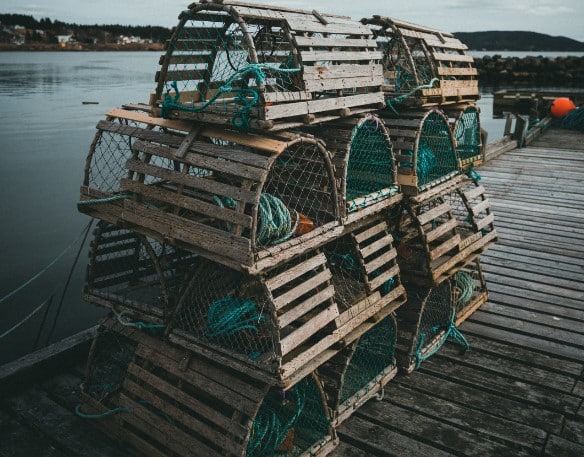
This project by the CRPMEM (Regional Committee for Marine Fisheries and Aquaculture) of Hauts-de-France, in partnership with Ifremer, aims to assess trap fisheries in the Eastern Channel and North Sea using scientific data collected according to a standardized strategy.
The project began in 2020 after many gillnet fishermen (whose main target species are flatfish such as sole and plaice) observed a decline in yields and subsequently switched to trap fishing. The project aims to improve the management of these species’ resources.
In early 2023, assessments of three whelk fisheries (from 2020) were released.
The models showed different scenarios across the three study areas:
- Seine-Maritime: Harvesting at MSY [1]
- Hauts-de-France: Trend toward overfishing of the species
- Baie de Seine: Overfishing of the stock
Furthermore, the minimum catch size does not allow for the conservation of spawning individuals.
Based on these findings, it would be advisable to reduce fishing effort and implement new management measures regarding the catch of mature individuals.
Although the Boulogne lobster fishery has not shown signs of overexploitation, the increasing fishing effort has resulted in a decline in biomass.
The edible crab stock is in good condition and at MSY, although vigilance remains necessary due to an increase in fishing effort.
As with whelks, fishing effort for these species must be reduced.
[1] The maximum sustainable yield (MSY) for a given fish stock means the highest
possible annual catch that can be sustained over time, by keeping the stock at the level producing maximum growth. The MSY refers to a hypothetical equilibrium state
between the exploited population and the fishing activity