Crustacean
Giant red shrimp
Aristaeomorpha foliacea
(GSA8) Corsica, (GSA9) Ligurian and Northern Tyrrhenian Sea, (GSA10) Central and Southern Tyrrhenian Sea, (GSA11.1) Western Sardinia, (GSA11.2) Eastern Sardinia
Fishing zones
Wild
Origin
4,4 cm (Lc)
Minimum size
Description
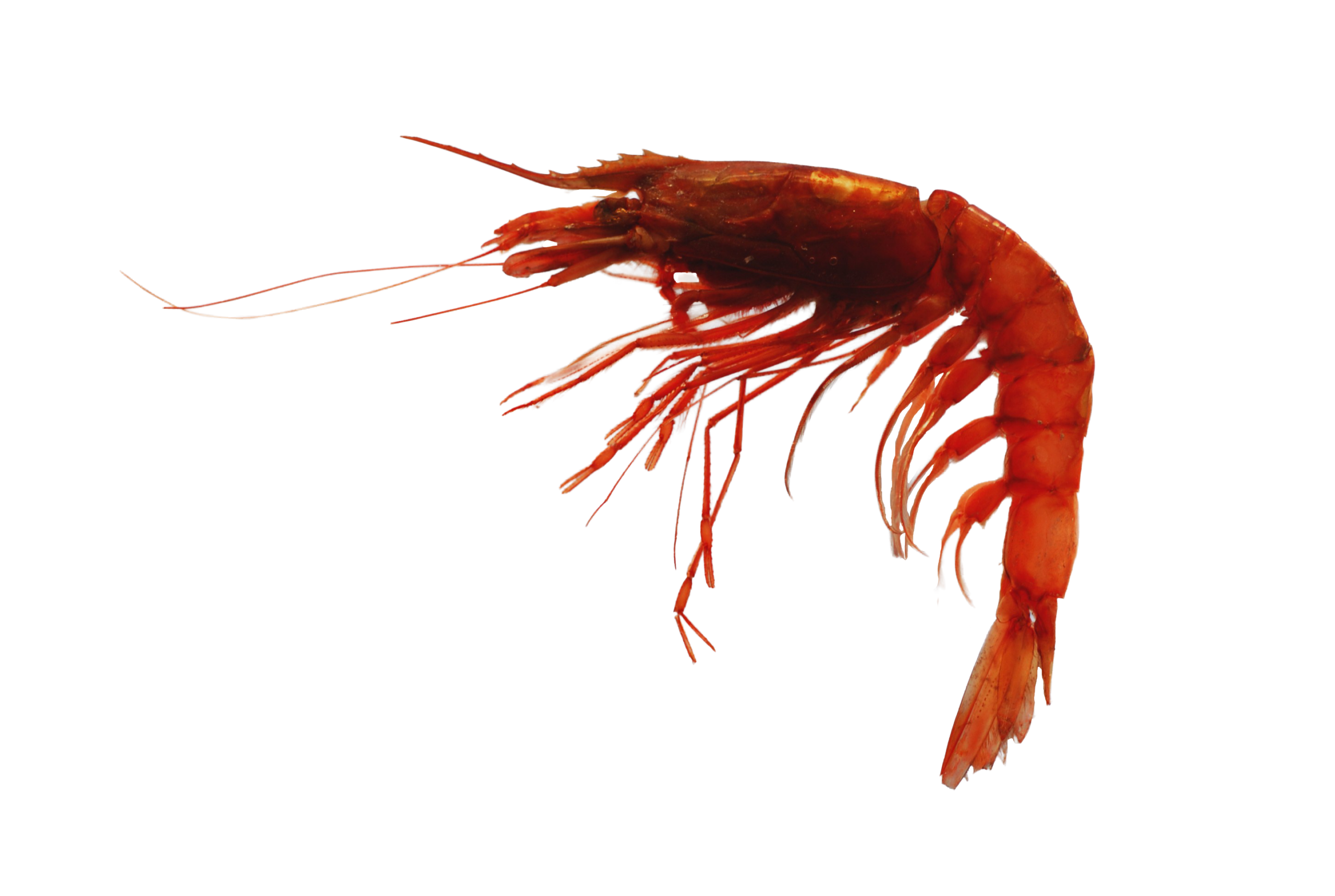
Aristaeomorpha foliacea is a large decapod crustacean with an elongated body and a thin, bright red carapace. Individuals generally measure between 12 and 16 cm, with maximum sizes reaching approximately 22.5 cm in females.
It is a deep-water species known as “benthopelagic”; it is nocturnal and exhibits vertical migrations within the water column.
It is a deep-water species known as “benthopelagic”; it is nocturnal and exhibits vertical migrations within the water column.
Habitat
This shrimp lives primarily in deep-sea environments along continental margins on soft substrates, mainly mud and sand. It is found at depths ranging from 60 to 1,300 meters, most commonly between 250 and 750 meters. It is a deep-sea species known as “benthopelagic,” exhibiting nocturnal activity with vertical migrations within the water column.
It is characteristic of deep-sea ecosystems on the continental slope.
It is characteristic of deep-sea ecosystems on the continental slope.
Distribution
The giant red shrimp has a wide global distribution in the Atlantic Ocean, the Mediterranean Sea, and the Indo-Pacific. It is found in tropical to temperate biogeographic zones.
Its latitudinal range extends from approximately 55°N to 55°S.
It is particularly abundant in certain areas of the Mediterranean, where it constitutes an important fishery resource.
Its latitudinal range extends from approximately 55°N to 55°S.
It is particularly abundant in certain areas of the Mediterranean, where it constitutes an important fishery resource.