Event

Flatfish

6 May 2026

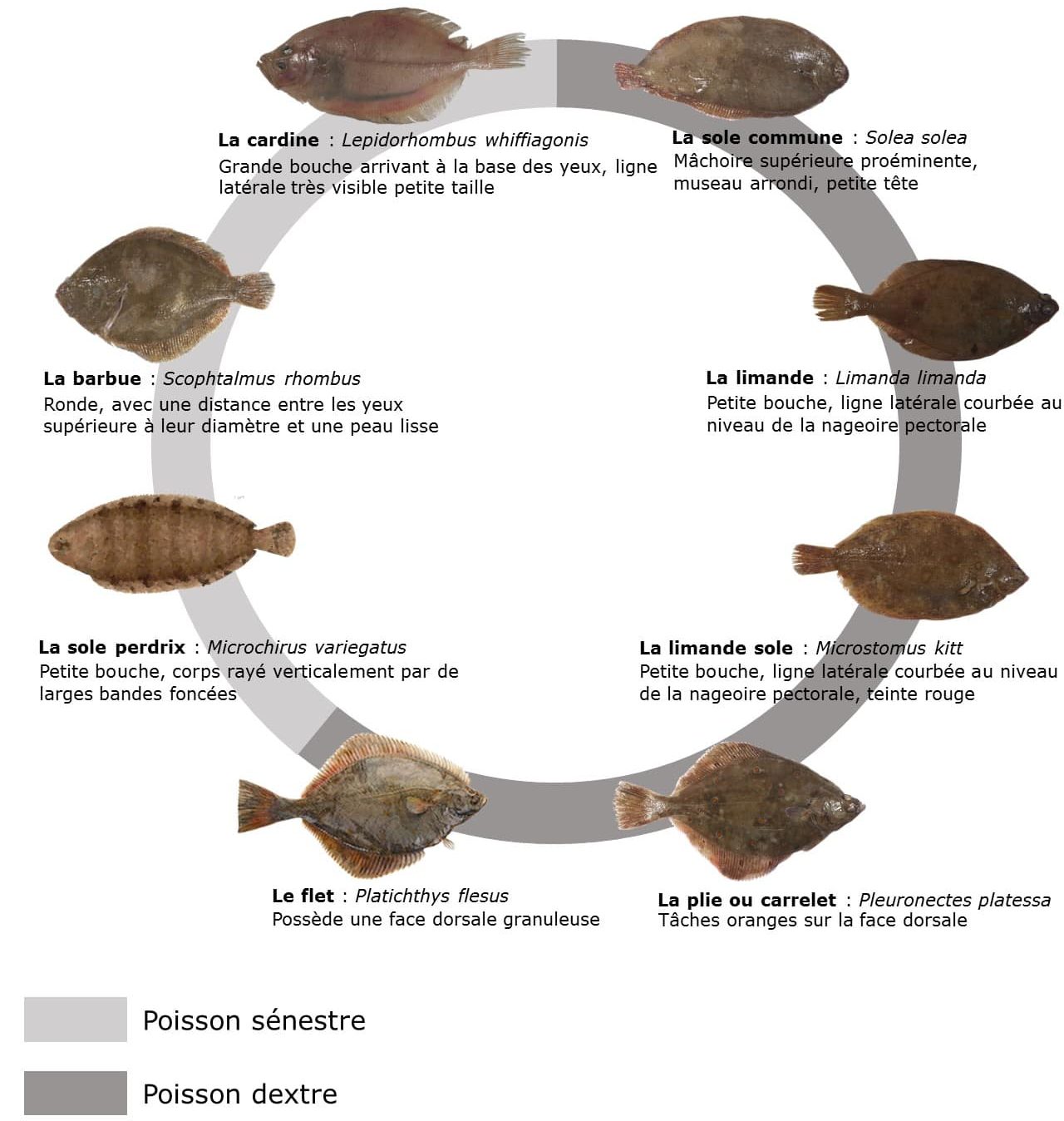
Pleuronectiformes, more commonly known as flatfish, are all benthic fish, meaning they live on the seafloor. They all have a lighter, unpigmented side that rests on the seafloor—this is the ventral side—and a colored side where the eyes are located—this is the dorsal side. There are a total of 11 families of “Pleuronectiformes” fish, comprising a wide variety of species.

Among these species, 8 are recommended by Mr.Goodfish this fall 2018.
Did you know?

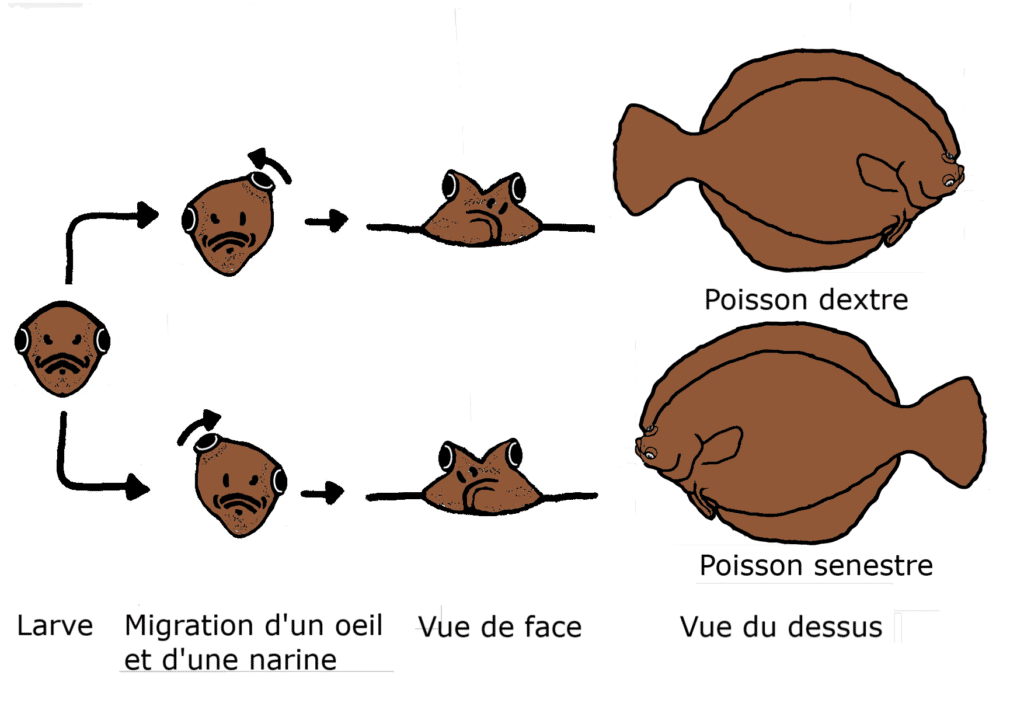
When they are born, flatfish fry are not flat at all! The larva looks normal, with an eye on each side. As the larva grows, one eye and one nostril migrate to the same side as the others, which will become the future dorsal side. The eyes will end up either on the right side—resulting in right-sided flatfish (such as flounder and sole)—or on the left side—resulting in left-sided flatfish (such as brill and turbot).
Share this article
You might also like
Event Professional
World Seafood Congress

World Seafood Congress

6 May 2026

  The World Seafood Congress, the international conference for the seafood industry, is held every two years. During the conference, various topics were discussed, including sustainable production, innovations and technologies in fishing, aquaculture, and industrial processes. For the first time, the Mr.Goodfish program was present to showcase its approach to sustainable fishing as well as […]

Fishing
The Boulogne-based trammel net fisherman

The Boulogne-based trammel net fisherman

6 May 2026

Today we’re giving you a glimpse into a day aboard a net fishing boat in Boulogne-sur-Mer!   The sun hasn’t even risen yet, but the port is already starting to come alive. It’s usually around 2 or 3 in the morning when the gillnetter crews arrive at the docks. On average, there are 3 to […]

Fishing
European regulations

European regulations

6 May 2026

In every European country, research centers, in partnership with commercial fishermen, conduct scientific surveys to collect various data (species, size, weight, quantity, etc.) that will enable them to assess the fishery. After analyzing this data, scientists from all European Union member states issue scientific advice by species through the ICES—the International Council for the Exploration […]