Today, let’s take a look at trawl fishing on one of our Breton boats.
It’s 11 p.m., the day is coming to an end in the city of Lorient, but it’s just beginning for the crew already on the docks. Five people on board are getting ready to set sail: the boat’s captain, a mechanic, and three deckhands, one of whom is in charge of the kitchen for the week. Depending on the target species, the duration of the fishing trip can vary, ranging from just one day to 10 days at sea.
The fishing boat is versatile: it adapts to the seasons, the target species, and the fishing grounds. It uses various fishing techniques: bottom trawling, pelagic trawling, and Danish seine fishing. It operates alone or in a pair with another 20–25-meter boat.
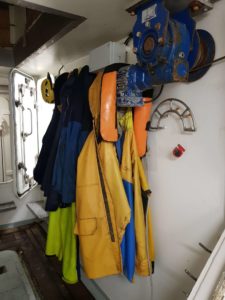
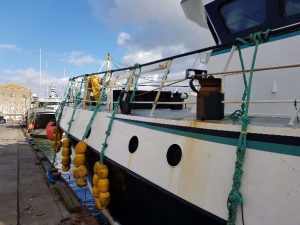 Today, the crew is planning a 48-hour fishing trip, with the goal of targeting certain species of cephalopods living off the coast of Brittany: cuttlefish, octopus, and squid. Under the harbor lights, the 22-meter-long boat starts up and sets sail for the open sea. The captain’s first task: defining a fishing zone. During the trip, the crew settles in, rests, or even takes advantage of the Wi-Fi. Indeed, living conditions aboard the boats have changed significantly. This crew is sailing on the latest generation of vessels; the comfort and well-being of the sailors were taken into account from the very beginning. Numerous features improve living and working conditions, such as reduced engine noise and work equipment positioned at waist height.
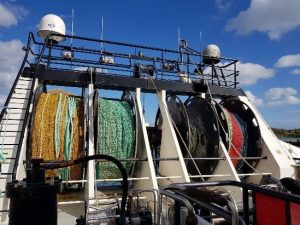
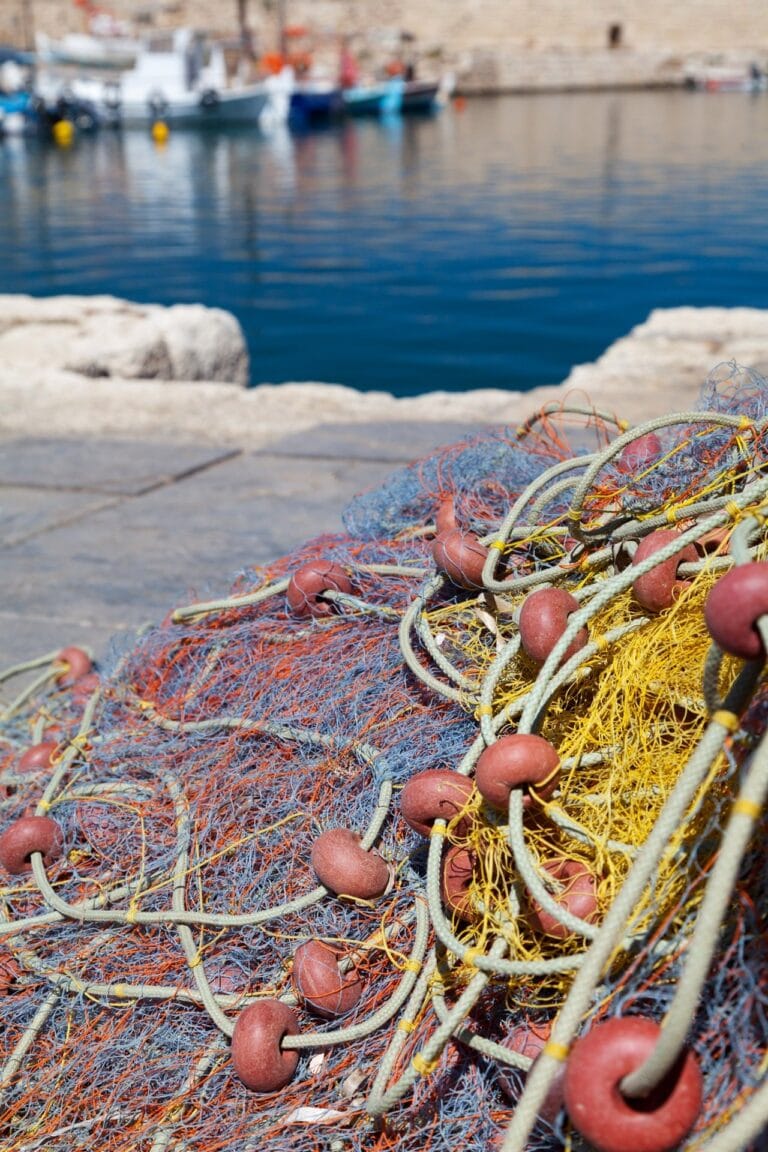
In the offshore fishing zone, the Danish seine is deployed on the seafloor to encircle demersal fish—that is, fish living near the bottom. The boat maneuvers, and the entire net is quickly hauled back on board. After two hours, several hundred kilograms will have been caught. To minimize the impact on the seabed and ecosystems, improvements have been made to various fishing techniques. For example, the seine is equipped with rubber strips, thereby limiting contact with the seabed. Additionally, the boat is equipped with numerous electronic devices to optimize fishing, such as fish finders and sonar. Some, placed at the entrance of the seine, provide an overview of the quantity of fish caught or any potential technical issues with the nets. Thus, these sensors provide visibility that helps limit unsuccessful fishing efforts. Currently, to optimize fishing gear and ensure its sustainability, collaborations between fishermen and scientific institutions continue to be established.
 Once on board, the fish are sorted, iced, and packed into crates by the crew. During the fishing trip, the crew’s schedule will involve setting the Danish seine (lowering it into the water), fishing, hauling in the Danish seine (pulling it back up), and sorting the fish. As a fisherman, you have to learn to eat and sleep between each “haul”: it’s a rhythm you have to get used to.
For two days, the weather will be mild, which will make the crew’s work easier. On stormy days, living conditions are more challenging and demanding; the sailors must live in tune with the turbulent waves.
Upon returning from the fishing trip and arriving at the dock, the fish is unloaded and will be sold at the Lorient fish auction. The fishing trip was short, ensuring the products remain very fresh. Professional fishermen today are aware of the importance of quality, which allows for a higher selling price, and this directly benefits them.
The week isn’t over yet for the crew, however. A few checks are made on the boat, a stop at the pump to refuel, and within two hours, the crew is already back out at sea. The crew will then set out for three or four days with another boat, as the fishing will be done using a pelagic trawl in a pair.
The life of a fishing sailor is a rhythm that takes getting used to, and it also involves daily risks. It’s a passion that can’t be improvised!