Shellfish
Farmed Japanese clam
Ruditapes philippinarum
—
Fishing zones
Livestock farming
Origin
—
Minimum size
Description
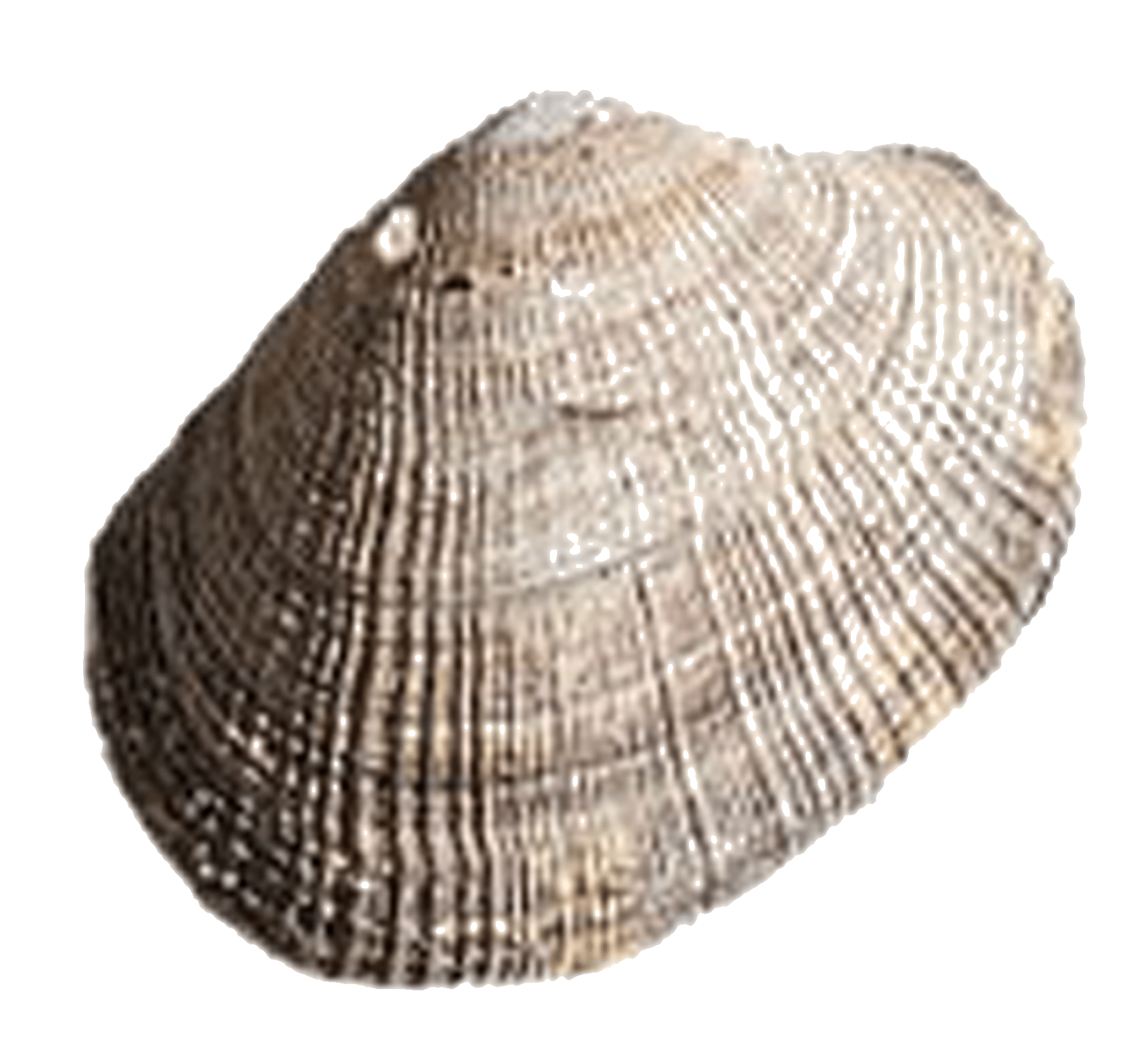
Its shell is oval and elongated, with radial ribs and very pronounced concentric striations, giving it a "lattice" or "grid" appearance (hence the name "carpet shell"). Farmed specimens often have a cleaner shell and more uniform growth due to sizing. Although variable, the sediments in the farming beds can influence the shell’s color (lighter in pure sand, grayer in muddy environments). It is selected for its rapid growth (reaching market size of 3.5 to 4 cm in 18 to 30 months depending on water temperature) and its high resistance to transport stress. It is a filter-feeding organism that feeds on phytoplankton and suspended organic matter.
Habitat
Here, the natural habitat is replicated or enhanced by humans. Cultivation areas: Primarily in the intertidal zone (estuaries, lagoons, and sheltered bays). Clams are seeded in farms on sandy or gravelly bottoms. They are generally cultivated under protective nets to prevent predation by crabs, sea bream, or seabirds.
Distribution
The distribution of aquaculture differs from natural distribution because it depends on the concessions granted. In Europe (the leading region), Italy is the top European producer (particularly in the Venice Lagoon and the Po Delta). France follows (Arcachon Bay, Gulf of Morbihan, islands of Charente-Maritime). In Asia (globally), China is the world’s largest producer, followed by Japan and Korea. In the Americas, aquaculture is highly developed along the Pacific coast (United States and Canada/British Columbia).