Fish
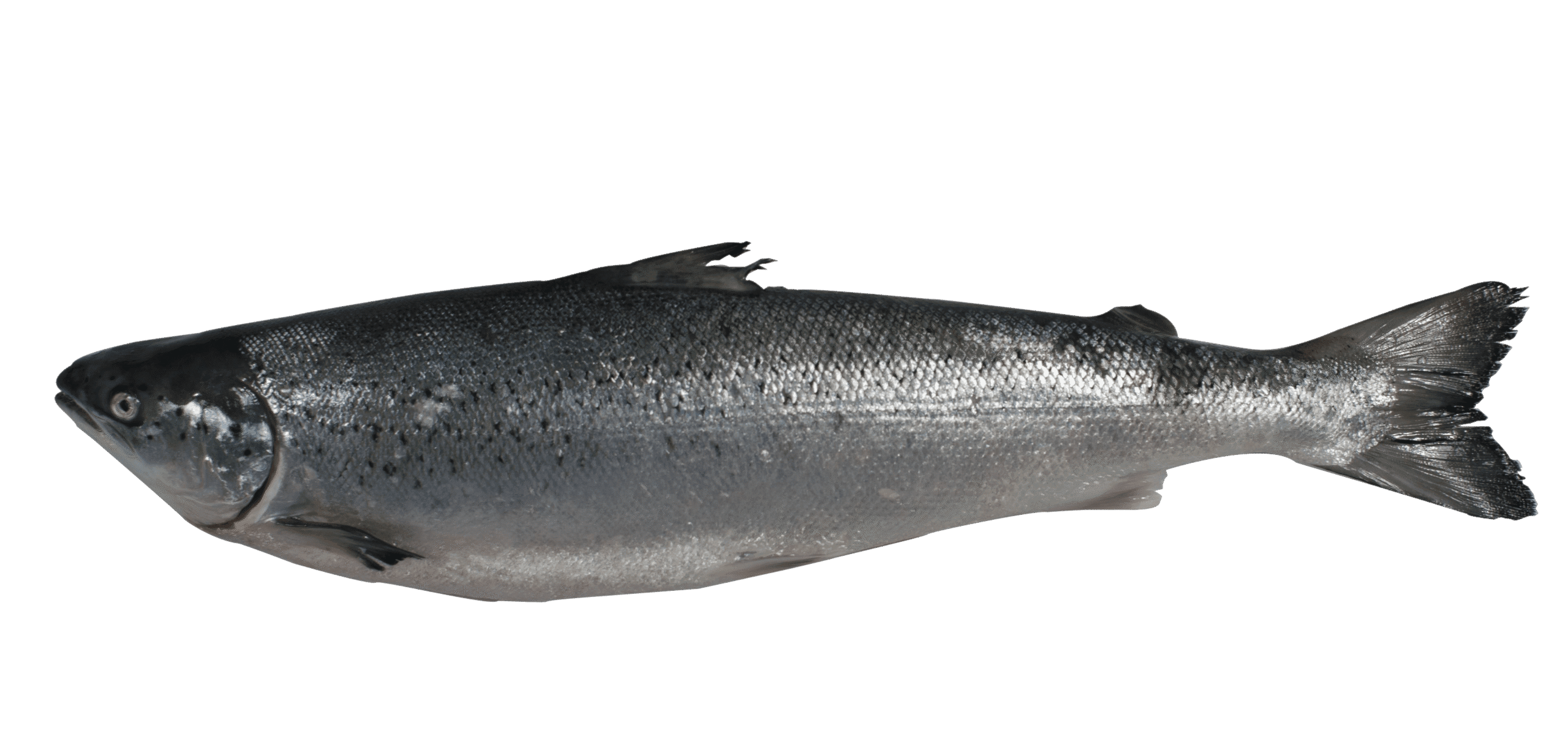
Atlantic salmon
Salmo salar
Hors saison
—
Zones de pêche
Livestock farming
Origine
—
Taille minimale
Description
Its body is spindle-shaped and elongated, with an oval cross-section. At sea: the back is blue-green, the sides are silvery, and the belly is white. A few black spots are present, mainly above the lateral line. It loses its silvery sheen and turns dull brown or yellowish during the breeding season. Males may have red spots or large black patches. The skin becomes thick and leathery. During the spawning season, males develop an elongated, hook-shaped lower jaw (called a "kype"). The maximum length can reach 150 cm, with a published record weight of 46.8 kg. The common size is about 38 cm (juvenile/medium stage). Presence of an adipose fin characteristic of salmonids. The caudal fin is forked in juveniles. Juveniles in freshwater feed on aquatic insects, mollusks, and crustaceans. At sea, adults hunt squid, shrimp, and other fish.
Habitat
An amphihaline and anadromous species (it spends part of its life at sea and migrates upstream to spawn). It is found in marine, freshwater, and brackish environments. At depths of 0 to 210 meters in the sea (generally between 10 and 23 meters). It prefers temperate and cold waters (2°C to 9°C). In rivers, it inhabits areas with fast currents, deep pools, and gravel bottoms. It requires highly oxygenated water.
Distribution
Temperate and Arctic regions of the Northern Hemisphere. From northern Quebec (Canada) to Connecticut and New York (USA). From the White Sea and Barents Sea basins to the Baltic Sea and North Sea, including Iceland and the European coasts.