Fish
Poisson
Greater weever
Trachinus draco
(GSA7) Gulf of Lion, (GSA8) Corsica, (IV) North Sea, (VIId) Eastern English Channel, (VIIe) Western English Channel, (VIIf) Bristol Channel, (VIIg) Northern Celtic Sea, (VIIh) Southern Celtic Sea, (VIII) Bay of Biscay
Fishing zones
Wild
Origin
22 cm
Minimum size
Description
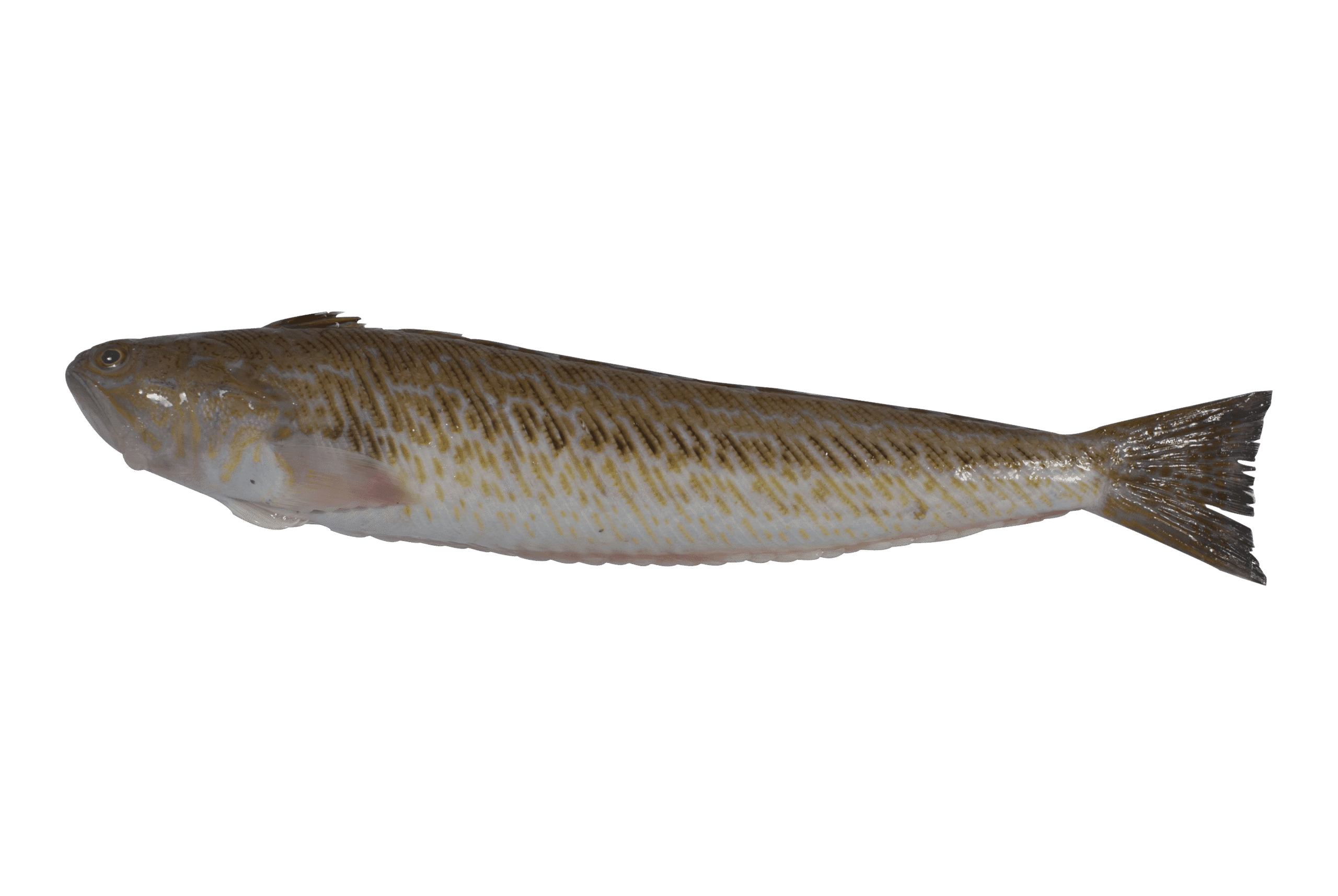
The body is elongated and laterally compressed. The head is massive, with eyes set very high on the head. It has a short, black first dorsal fin bearing 5 to 7 venomous spines. Another venomous spine is located on the operculum (cheek). The color is generally yellowish-gray with dark oblique lines on the flanks. It is a formidable nocturnal predator. It feeds mainly on small benthic fish, shrimp, and other small crustaceans, which it captures by surprise by darting out of the sand.
Habitat
A marine and benthic species (living on the seafloor). It is found on sandy, gravelly, or muddy bottoms, often buried with only its eyes and dorsal fin visible. It generally lives at depths of 1 to 30 meters, but can descend to depths of up to 150 meters.
Distribution
Eastern Atlantic: From Norway to Morocco and Madeira. Found throughout the Mediterranean Sea and the Black Sea.