Fish
Poisson
Common gurnard
Lepidotrigla cavillone
(GSA7) Gulf of Lion, (GSA8) Corsica
Fishing zones
Wild
Origin
10,5 cm
Minimum size
Description
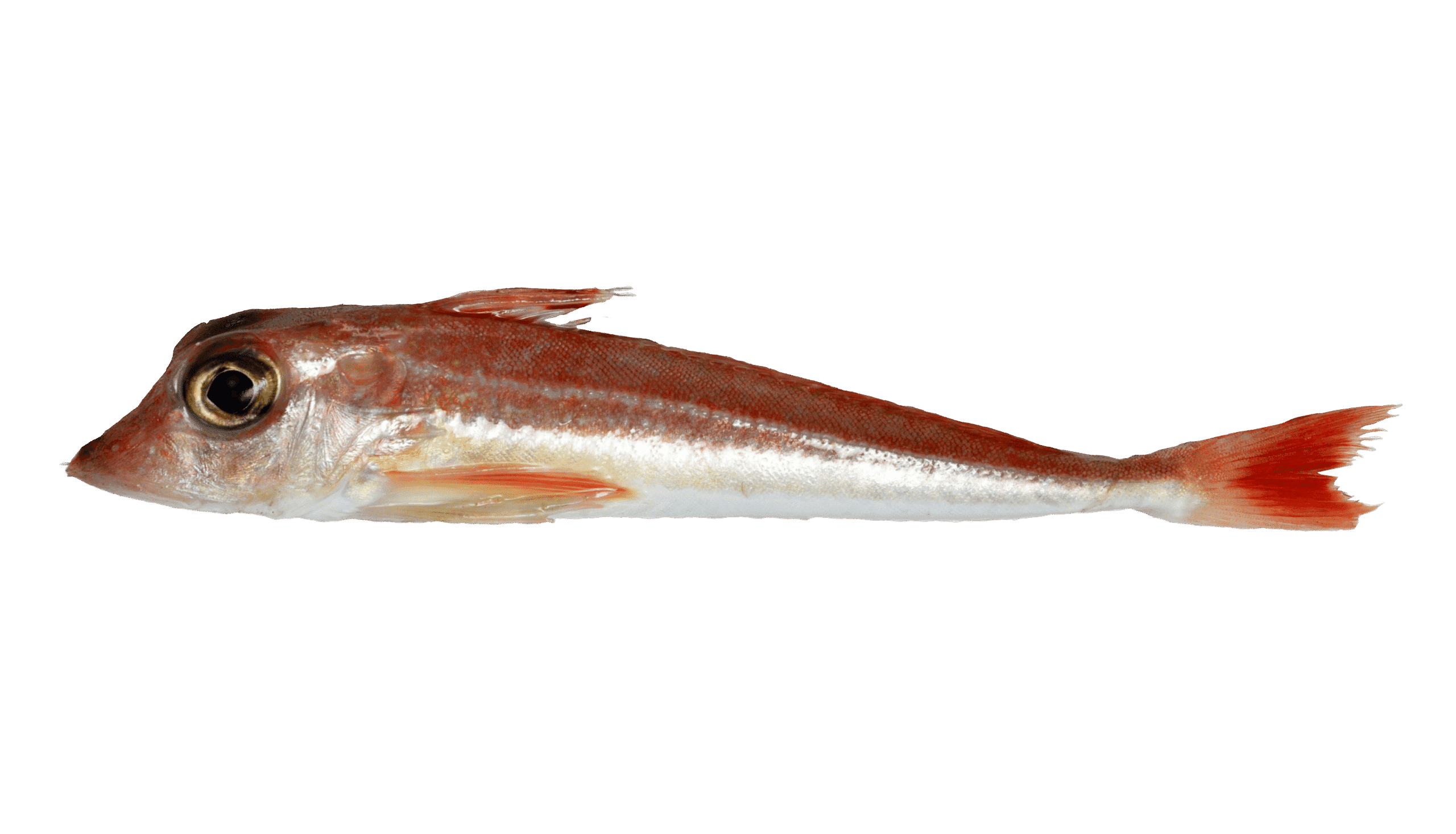
Like all gobies, it has a massive head protected by bony plates. Its profile is very snub-nosed (abrupt). Its main characteristic, which gives it its English name, is the presence of large scales along the lateral line. Its pectoral fins are broad and colorful, with the first three lower rays free, thickened, and mobile. These rays serve as tactile and sensory organs when walking on the bottom. The body is a fairly vivid pinkish-red or orange on the back and sides, lightening to white on the belly. The pectoral fins are often edged with blue or purple. It is one of the smallest gurnards. Its average size is 12 to 15 cm, with a maximum of 20 cm.
Habitat
It is a benthic fish (living on the seafloor) that prefers the continental shelf. It particularly favors soft substrates, mainly mud, muddy sand, or fine gravel. It is generally found at depths between 30 and 150 meters, but it can descend to depths of up to 450 meters. It uses its pectoral fins to walk across the sediment and flush out small invertebrates (crustaceans, worms) hidden in the ground.
Distribution
It is extremely common throughout the Mediterranean basin (Provence, Corsica, Italy, North Africa) and is found in the Adriatic Sea. It is absent from the Black Sea. It is found from southern Portugal to the coasts of Morocco and Mauritania. It is rarer north of the Bay of Biscay.